An Ivory Gull on New Year’s Eve
Jan 05, 2017
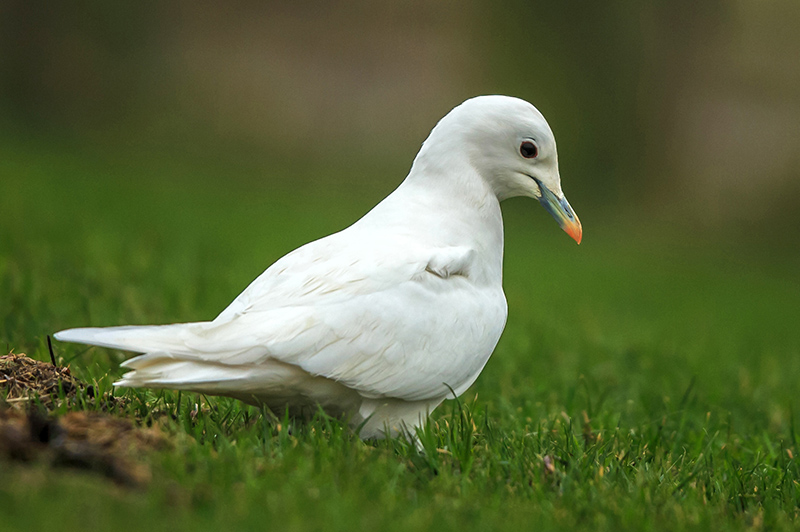
My wife and I spent our Christmas holidays in North Frisia at the coast of the German Wadden Sea, as we did many times before. We enjoy the wide open landscape, the solitude and the long hikes on windswept beaches. Although bird migration has come to a halt in the last days of autumn, there are still tons of birds. Flocks of horned larks, snow buntings and twites foraging at the driftline are welcomed visitors from the north. And on the tidal flats, there are dunlins, knots, curlews, geese of various kinds, merlins and peregrines and of course, gulls. On December 26th, the second Christmas day, a strong northwestern gale was blowing. In the following days, the sandbars at St. Peter and Westerhever were crowded with herring gulls and also great black-backed and common gulls were present in good numbers. And then, at the evening of December 30th we were electrified by a post on ornitho.de: An adult Ivory Gull (
Pagophila eburnea) has been discovered by the warden on Hallig Hooge, a small undyked island some 30 kilometers off the mainland! The ivory gull is not any gull, it is “The Gull”. This mythic bird is an extremely rare visitor from the high Arctic, and is seldom seen south of the pack ice edge. Numbers are declining alarmingly due to global warming and also because of contaminants such as mercury. If the bird will decide to rest until the following day, this would be the first (twitchable) ivory gull in Germany since 1997! However, we faced one serious problem: during the winter months, there is no ship running between Hooge and the mainland on a regular schedule. The next ship bringing supplies to and islanders from the island would go six days ahead. So it was the vigorous initiative of Martin Kühn, a good birder friend and ranger of the Wadden Sea National Park, to activate the birder community via WhatsApp and the Club300 forum. Hence, it was possible to hire the passenger vessel “MS Seeadler” from the Adler shipping company and at the next morning the ship put to sea with 60 birders (from all over the country) aboard. We arrived at Hooge at 1030, the weather being calm but misty. The warden, Florian Braun, welcomed us with the bad news: “Ivory Gull flew off five minutes ago!” Our minds freezed. Whereas some asked for the way to the next pub, others, far from abandoning hope, dispersed in all directions in search for the lost gull. Soon after, a person in the distance was seen, frantically waving the arms. The crowds hurried to this spot in the distance. Indeed, the Ivory Gull was still there and probably only performed some circuits around the island. Finally, the bird flew to a dwelling mound (on which the islanders erect their homes for protecting them from the storm tides) close to the landing pier. On the fenced lawn, the gull started foraging on earthworms. The bird was very approachable and everybody was taking photographs from a very close distance. Soon, the bird had enough (not sure if from the earthworms or from the birders) and flew off to rest some 150 meters away on a soggy pasture, in the company of some herring gulls. About an hour later, the captain of our ship was signaling that it was time to weigh anchor. The tide doesn’t wait! When the crowd moved to the pier, the ivory gull flew back to the lawn to continue its earthworm meal. On the way to the mainland, we spotted and immature great skua and finally, we also saw the immature Sabine’s gull which lingered around about 10 kilometers up the coast since a couple of days. The ivory gull was confirmed by the warden on the next day (New Year) but was gone on January 2nd.
Berlin September Storms
Sep 07, 2016
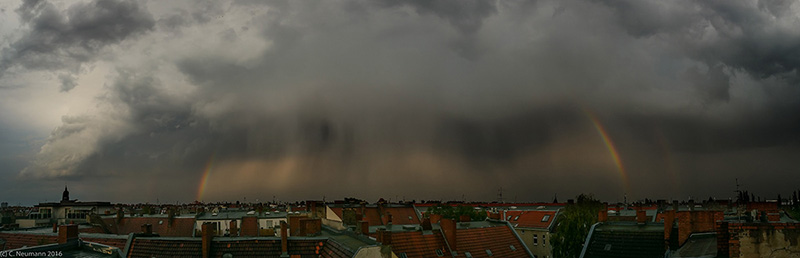
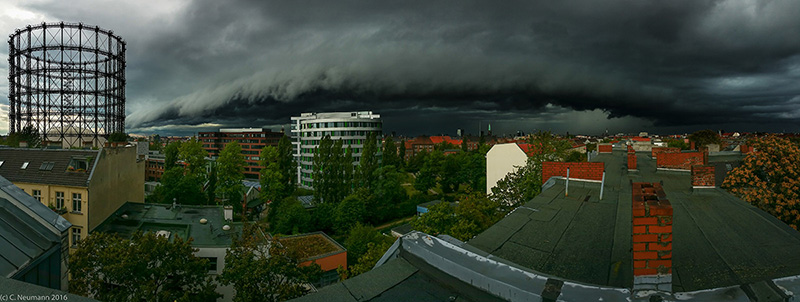
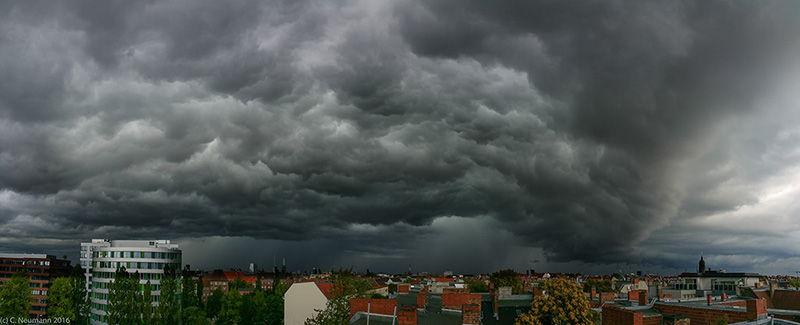
It is still very warm in Germany, with unusually high temperatures of 32°c expected for the next couple of days. And so, the thunderstorm season, normally waning around the last days of August, is still active. Here are some images from last weekend's storms, including a nice shelfcloud and rainbows.
River Otter Encounter
Aug 26, 2016
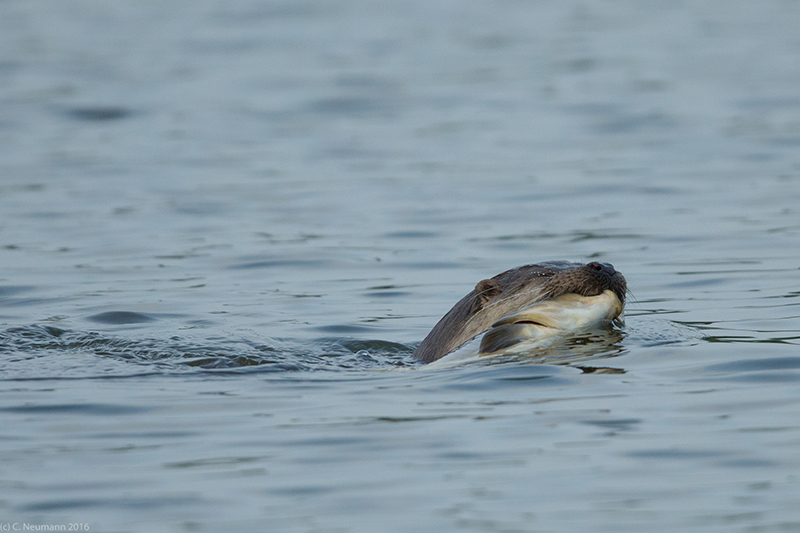
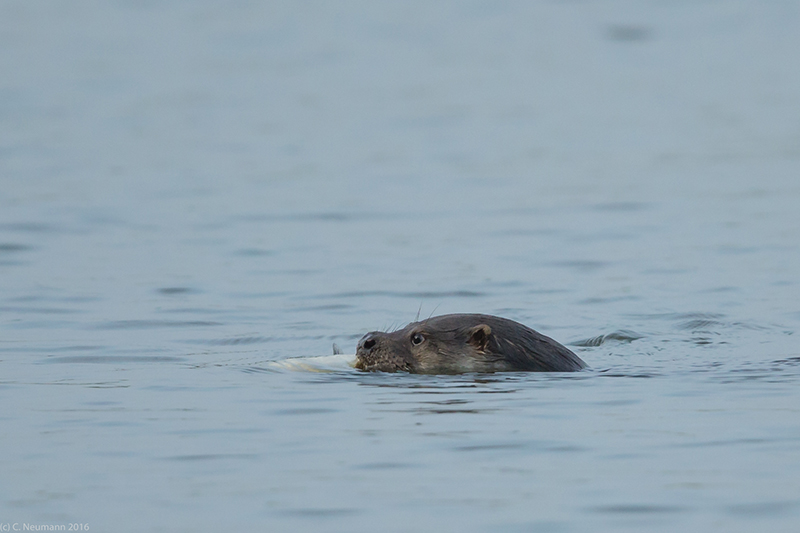
At the same time when I was photographing ospreys in the Spreewald biosphere reserve (see previous entry below), I had an encounter with a Eurasian river otter (
Lutra lutra) holding a big carp in its mouth. Otter populations recovered significantly during the last decades mostly because of reduction of pollution and improving water quality. However, otters are shy and elusive animals and daytime encounters are rare and memorable events.
Hunting Ospreys
Aug 26, 2016
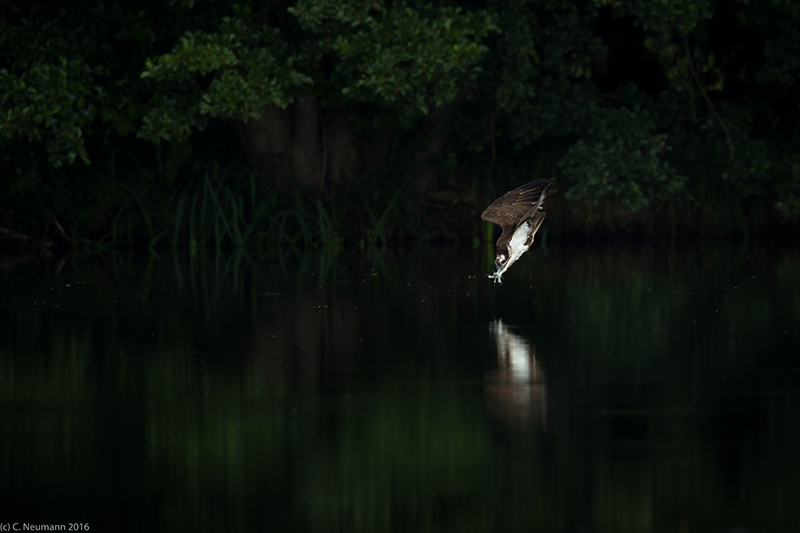
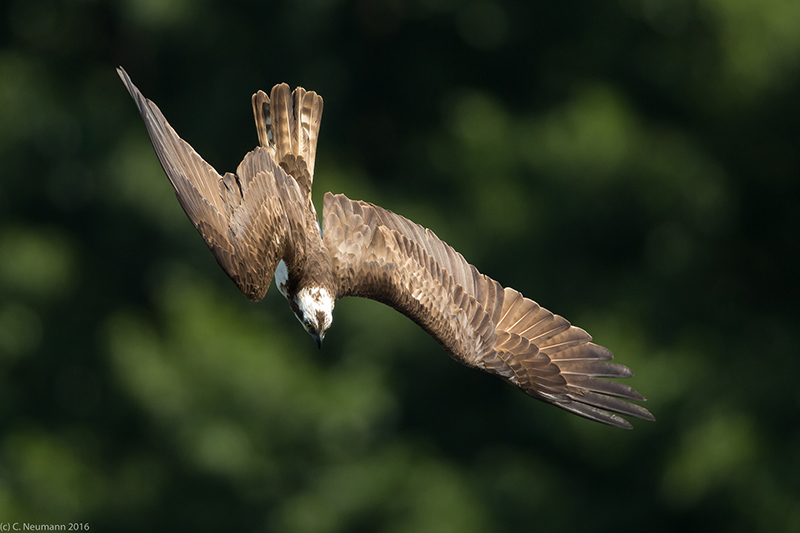
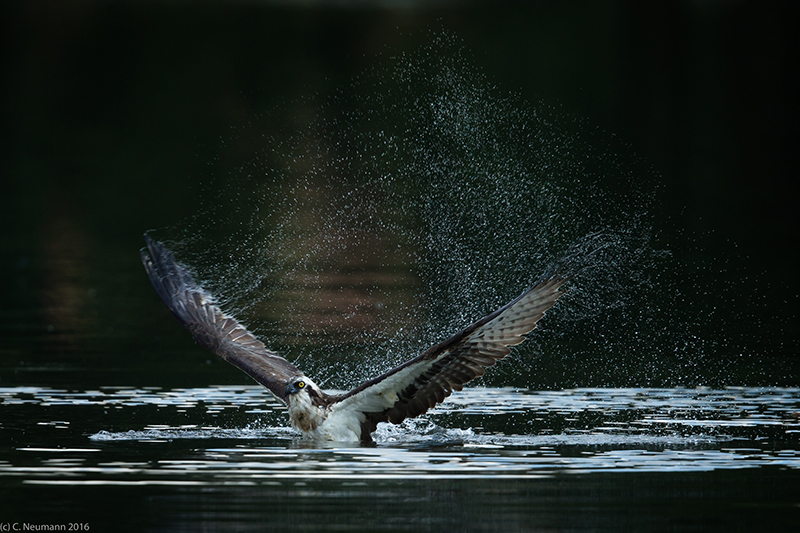
In July, I had a great time photographing hunting ospreys (
Pandion haliaetus) at fish ponds in the Spreewald biosphere reserve southeast of Berlin. At this time of the year, the hatchlings are quite large and hungry – thus the male birds frequently visit the ponds to provide food for both, the female and the offspring. At the same time, however, the carps reached a considerable size and weight, and the ospreys were often struggling to take off with the heavy prey in their talons. Often enough, they had to let them go. More images have been uploaded in the
gallery.
Short-toed Snake Eagle in Brandenburg: Damage of Primaries caused by Shotgun Pellets?
Aug 26, 2016
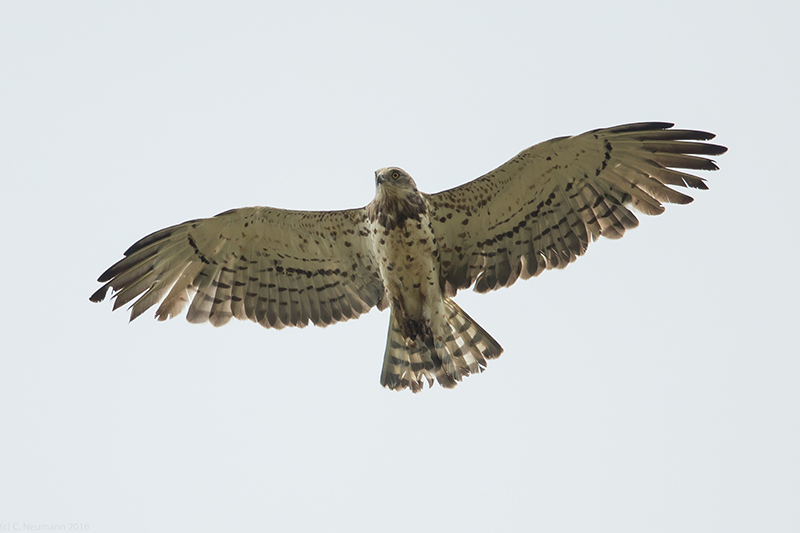
This summer, a fair number of Short-toed Snake Eagles (
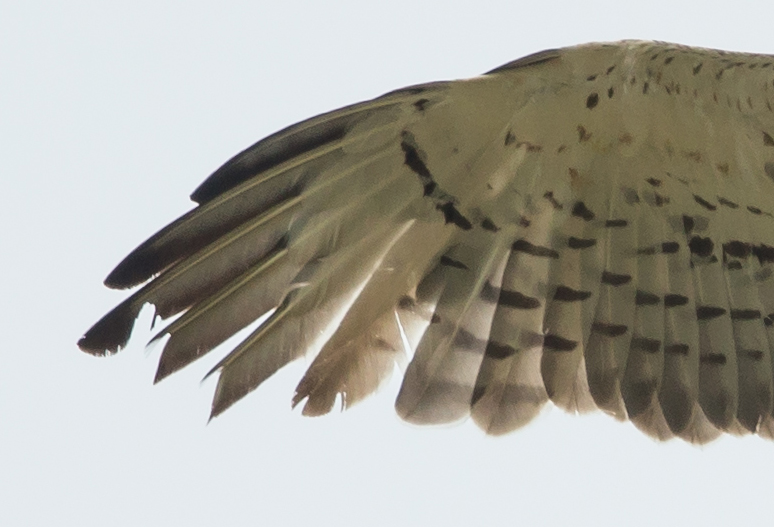
Circaetus gallicus) showed up in Germany. Most of them were immature birds and some of them rather long-staying guests, pleasing twitchers and bird photographers alike. In Brandenburg, one adult bird was briefly seen at the Havelländisches Luch near Buckow on July 16 before it continued its journey just a few days later on July 21. I was lucky to photograph this bird on the early morning of its final day in the region, when it was circling at close distance just above my head. A closer look to the photographs revealed a slight damage of the outer primaries of the right wing. According the Pascal Eckhoff, conservator of the bird collections at the Berlin Museum of Natural History, this pattern of damage is rather untypical for natural wear. He suggests that this bird was probably shot at with lead shot. Please let me know what your opinion is about this damage. Whatever the case may be, we wish this graceful bird a lucky and pleasant journey on its migration to its African wintering grounds!
Powerful Opening of the Thunderstorm Season
Jun 01, 2016
Whereas 2015 was a bust year (considering t-storms), this year seems to be more promising: The last week of May was characterized by high temperatures and significant CAPE and moisture values. A virtually stationary elevated Low lingering over central Germany advecting hot and moist air from the Mediterranean, diurnal heating and converging winds were the perfect ingredients to trigger late afternoon t-storms. This panoramic image of a shelfcloud of an upcoming thunderstorm was photographed from the roof top of our apartment on the evening of May, 30.
Field Notes: Familiar Faces and New Kids on the Block
Mar 10, 2016
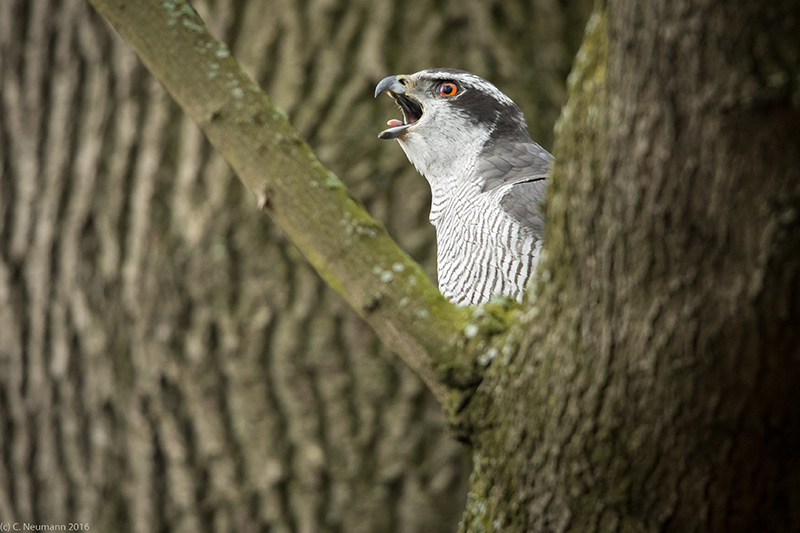
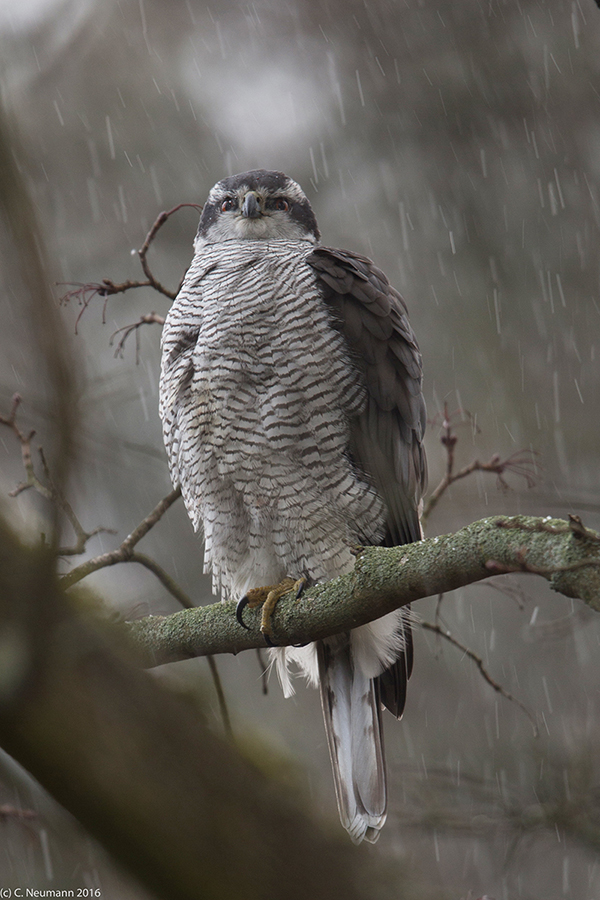
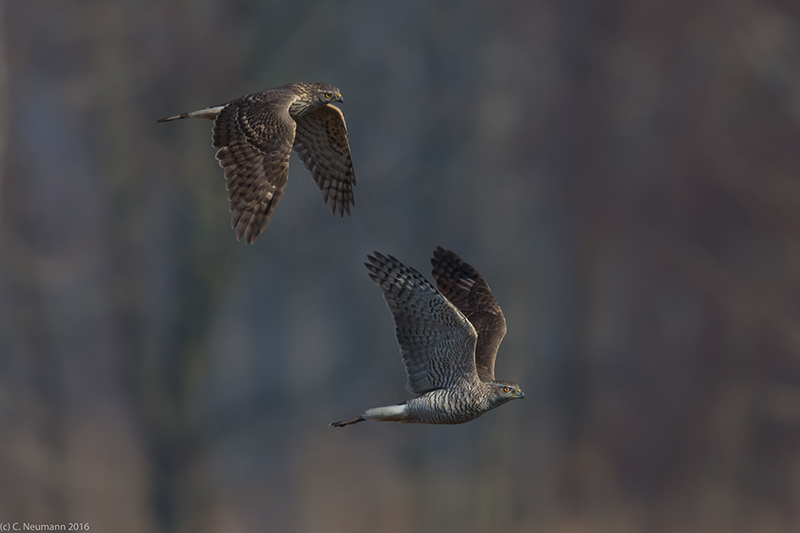
Goshawk courtship is underway. Some well-known breeding pairs have disappeared or moved elsewhere. The reason may be that one of the mates died (we suggest that illegal persecution is again an issue in Berlin!), because of disturbance or because the nest came down during winter. On the other side, new, formerly vacant places are now occupied by goshawk pairs performing courtship display. In such cases, often one, or both partners are in their second year, thus breeding for the first time. This clearly indicates that the goshawk population is subject of highly dynamic demographic processes. Colonization of new breeding places also shows that the Berlin goshawk population is still growing and does not yet acquire saturation.
Field Notes: Eagle Owl in the Havel River Valley, NE Germany
Mar 08, 2016
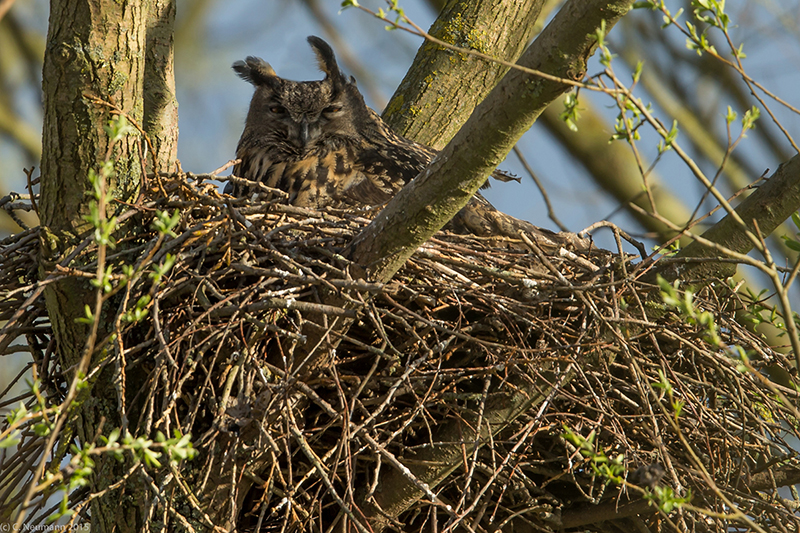
I confess, I have been remiss updating my blog regularly in the past year. Honestly, I make a vow to nourish and cherish it on a regular schedule from now on! Here is a short note on the successful reproduction of the Eagle Owl (
Bubo bubo) in 2015 in the lower Havel River valley after almost one century of absence. The female shown above raised three chicks in a nest of the Red Kite (
Milvus milvus) which the latter has built in the previous year. Following an all-time low in the twentieth century (principally due to human persecution) Eagle Owls currently expand their range and rapidly gain lost territory. Eagle Owl is a top predator even of other raptors as is indicated by the remains of Black and Red Kites and Common Buzzards found below the nest tree (both, fledglings and adults). Soon after the young eagle owls have fledged, the nest came down during a summer storm. Actually, the hooting calls of the Eagle Owl can be heard again in calm nights.
Tracks and Signs: Goshawk Kill
Mar 07, 2016
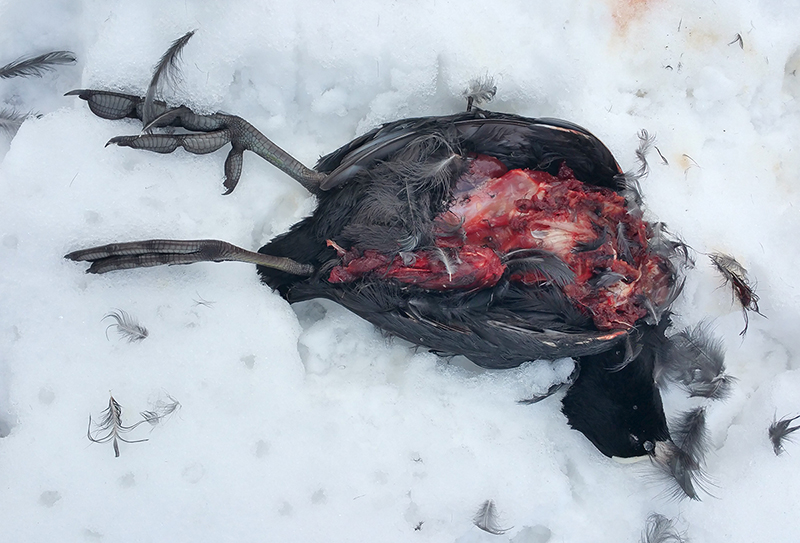
The picture above shows a Eurasian Coot (
Fulica atra) killed and partly eaten by a male goshawk. The bird has been killed in a nearby park and subsequently transported to the nest site. Here it has been partly plucked on the ground and partly eaten. It is a rather untypical example of a goshawk kill. In Berlin, coots do not belong to the typical goshawks prey since they show an explicit preference for Feral pigeons. Second, male goshawks normally completely pluck their prey and start with eating the head (i. e., the brain, which contains lots of nutrients). Here the bird started with the meat of the breast, a strategy more typical for Peregrine falcons. I found this coot on a track of a little used cemetery. I suppose the goshawk has been disturbed and would return later to finish its meal.
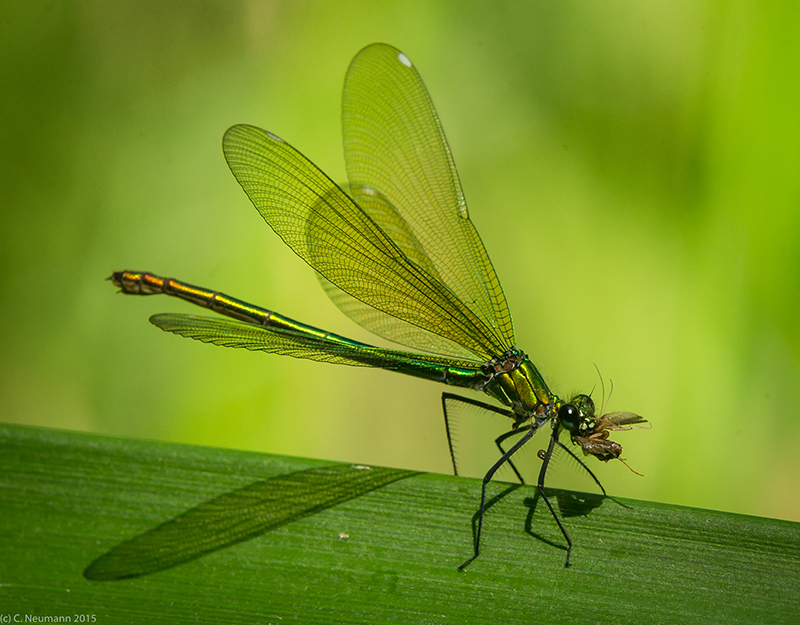
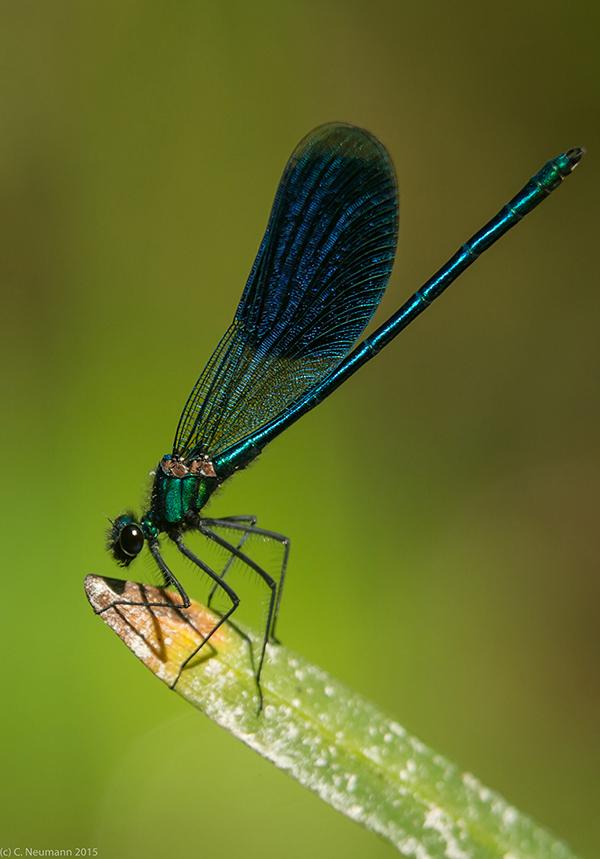
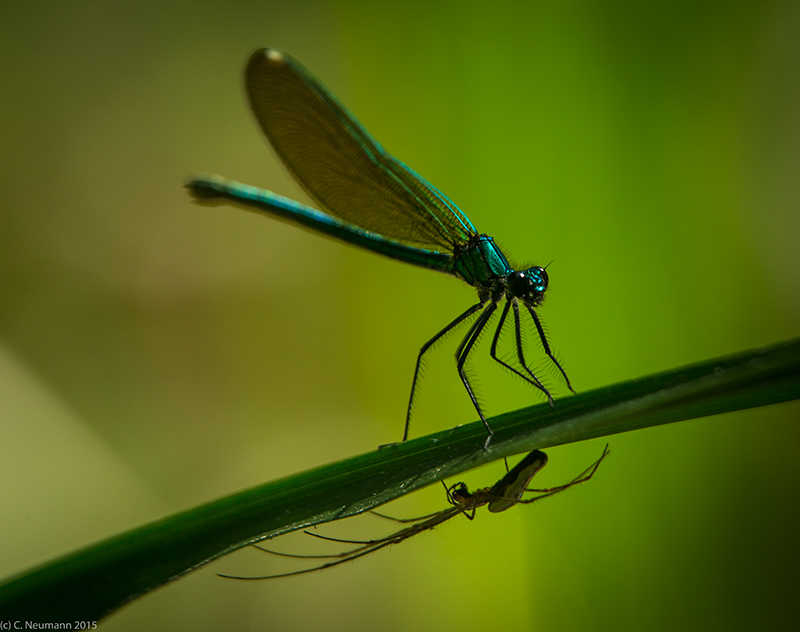
Shooting Damselflies with the Canon EF 70-200mm f/2.8 Lens
Feb 23, 2016
Although the Canon 70-200mm F/2.8 is not a macro lens, close-up photography, at least in some sense, is possible. Last summer, I was photographing damselflies at the Müritz Nationalpark in northeast Germany. First, I tried the EF 100mm F.2.8 macro. However, much to often the minor working distance of this lens scared the object of desire away. The solution would be a longer lens. Since I do not possess the Canon EF 180mm f/3.5L macro lens, I thought it would be a good idea to try out my EF 70-200mm f/2.8L IS II lens. Additionally, I used a 25mm extension tube and a polarizer. It was a bright, sunny say, so I relinquished using flash. I stopped down to f7 and activated the image stabilizer. Some of the results (fairly sufficient) can be seen above. The species is the Banded Demoiselle (
Calopteryx splendens), a rather common damselfly found at rivers and creeks.
The Bruno Affair and the Slaughter of Large Carnivores by U.S. Government Agencies
Feb 18, 2016
The first brown bear (JJ1, also known as “Bruno”) returning to the German Alps in 2006 was soon after assassinated by hired hunters. American diplomats mailed to their superiors back home about the so-called "Bruno affair" (leaked by WikiLeaks):
“
Perhaps the greatest insight from the whole Bruno affair might be that despite the veneer of "greenness" extolled by German society, modern Germany in fact coexists uneasily with untamed nature. (…) True wilderness, even in mountainous Bavaria, hasn't really existed in Germany for generations -- nature is good, as long as it is controlled, channelled, and subdued. If the saga of Bavaria's "Problem Bear" is any indicator, the strategy of reintroducing wild bears to the Alps, at least the German Alps, may be doomed to failure -- that is, unless the bears are willing to cooperate by not being too wild.”
This statement is in stark contrast with dealings with large carnivores in the United States:
Allone in 2014, U.S. Fish and Wildlife Services shot, trapped or poisoned
796 bobcats, 322 wolves, 580 black bears, 305 cougars, and 1,186 red foxes. And that’s nothing compared to coyotes. That year, the agency killed
61,702, one coyote every eight and a half minutes. The main reason for this killing is toy to defend livestock and revenue-generating game animals like deer, often on public land (source:
HCN).
A Pallid Harrier (Circus macrourus) in the Havelland Marshes
May 28, 2015
This is just a brief account on the sighting of a Pallid harrier (
Circus macourus) which momentarily can be observed in the "Havelländisches Luch" between the villages Buckow and Garlitz next to the country town of Nennhausen. The pallid harrier is the rarest species among the four western Palearctic harriers (i.e., Hen, Montagu’s, Western marsh and Pallid harrier). It is a scarce vagrant in Germany. The pallid harrier’s present breeding range extends from the Ukraine and southern Russia, to north-western China and western Mongolia. Formerly, the breeding range used to be much greater, extending further into Eastern Europe. It winters mainly in sub-Saharan Africa, and from Pakistan, India and Sri Lanka, east to south China.
It is worth mentioning that this bird was first observed on May 14th. It is a second year immature bird with the inner primaries just starting to be replaced. On the base of the yellow iris color and the almost unbanded primaries, this bird can be sexed as a male individual. Comparable to spring 2014, there have been a fair number of records so far of this graceful harrier in Germany.
Bird from the North Country
Feb 20, 2015
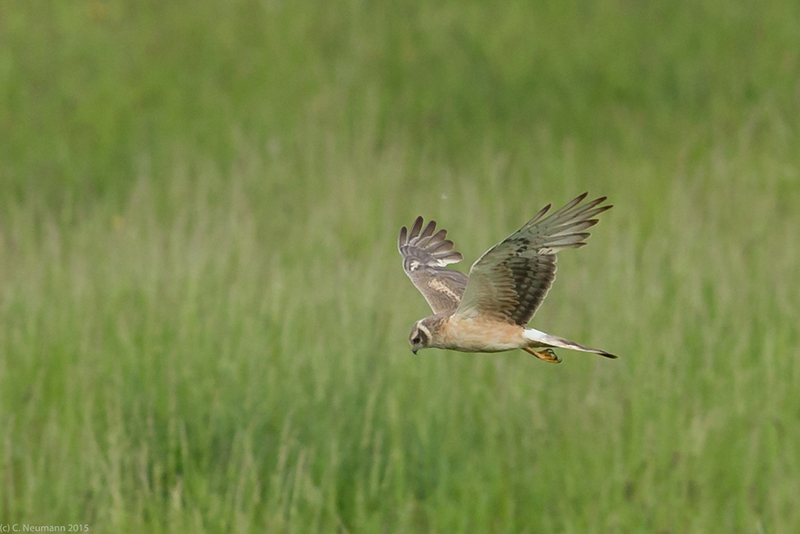
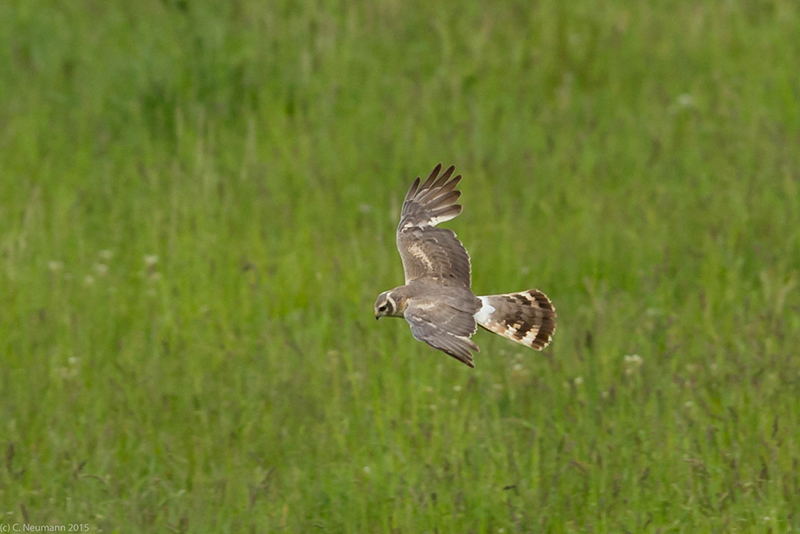
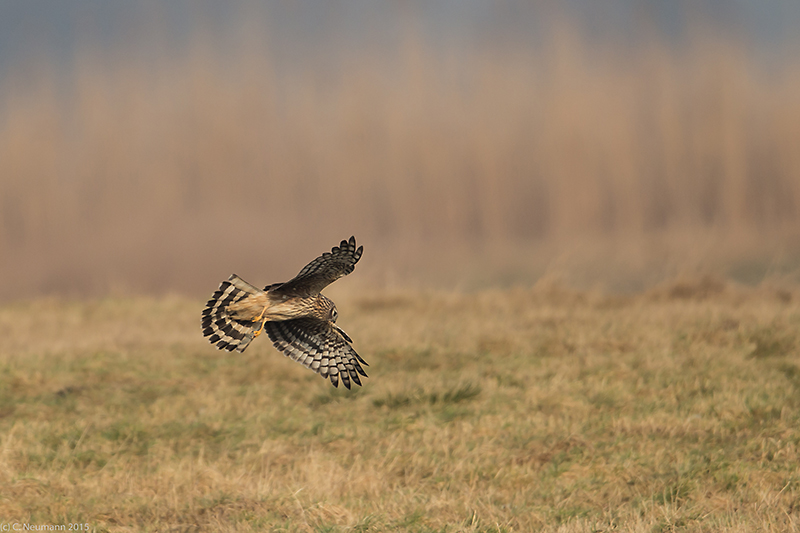
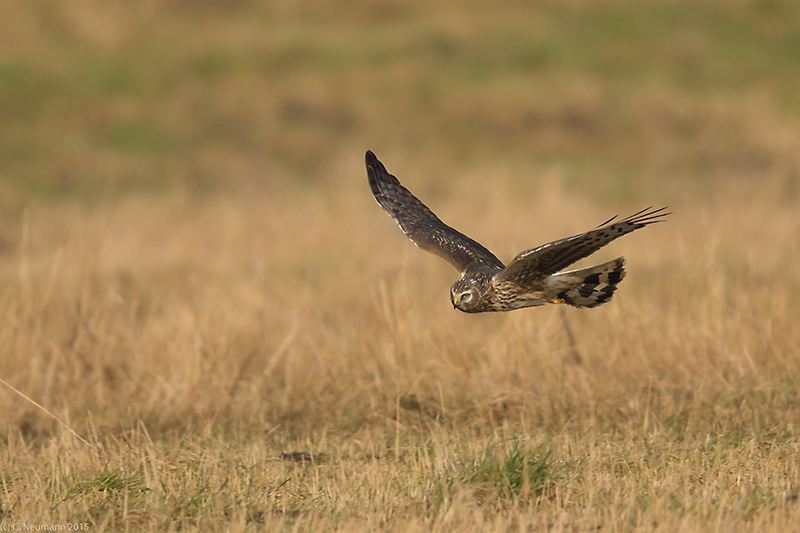
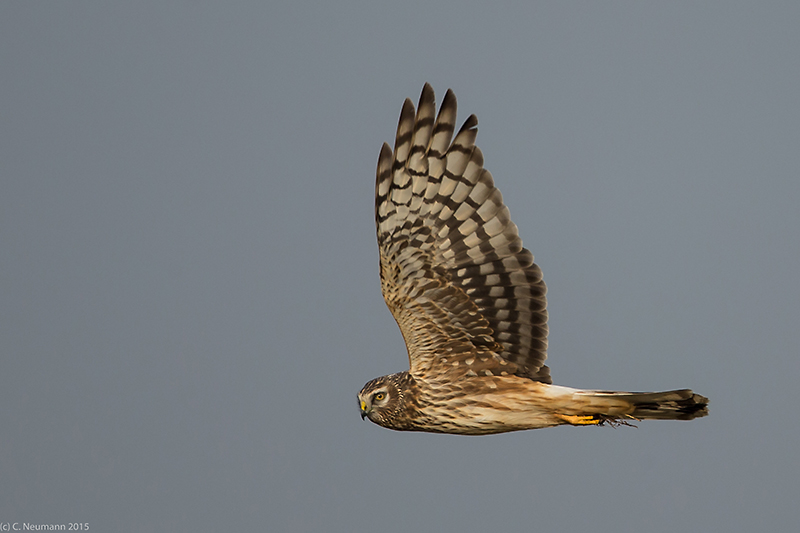
Field voles are plentiful this winter and so it is surprising that so few hen harriers (
Circus cyaneus) are encountered at their traditional wintering sites in northern Germany. Birds from Fennoscandia, the Baltic and Russia are strictly migratory and normally the first birds show up in September at their wintering grounds. There is a peak in October and spring migration lasts from March until May. Hen harriers are solitary hunters but use communal roost, mostly in reed beds. One traditional roost site northeast of Berlin is used for many years together with Merlin falcons.
One explanation for the low number of wintering hen harriers is that there is still enough prey available in the north so that the birds do not feel the need to migrate further south. The other, and more probable explanation is that overall hen harrier numbers are on the decline due to habitat loss and poor reproduction success.
I was lucky to watch and photograph this hunting female last weekend on the Havel river floodplains west of Berlin.
Goshawk Cover Story
Jan 05, 2015
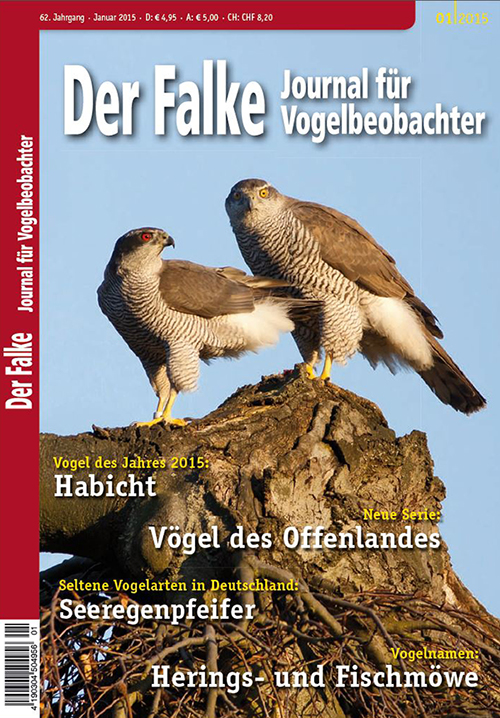
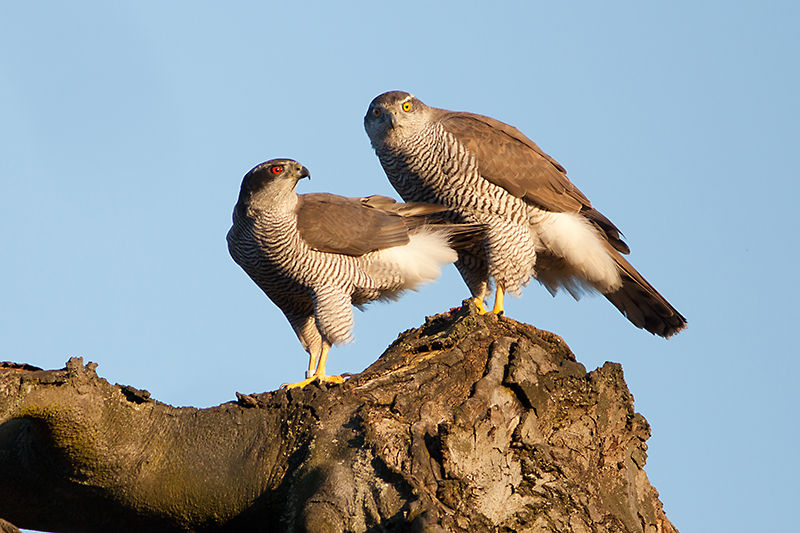
The image of a goshawk pair bathed in the warm light of the winter afternoon sun is one of my most frequently published and most widely recognized photographs. It now made it on the cover of the ornithological journal "Der Falke", Germany's leading birding and field ornithology magazine.
Picture book on the Northern Goshawk now available!
Dec 04, 2014
As posted earlier, (see entry from October 20), the Northern goshawk (
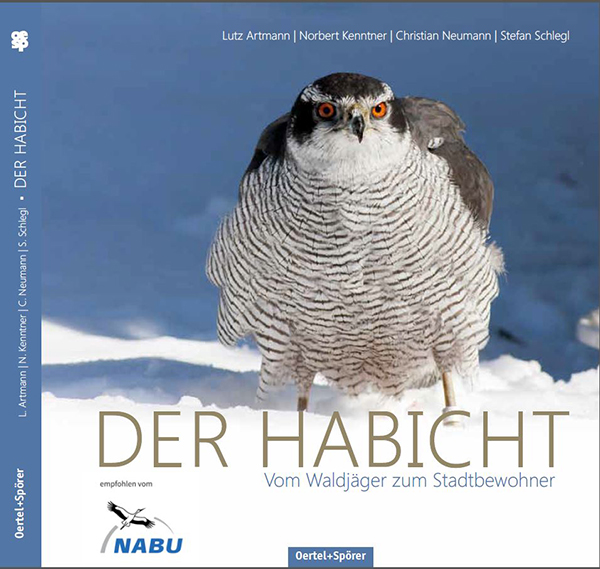
Accipiter gentilis) has been chosen as the "Bird of the Year 2015" by Germany’s major nature conservation organization NABU. So I am happy to announce our recently published book on the Northern goshawk, which will be available from now on (and not a moment too soon before christmas!) at bookstores, Amazon.de etc.. Copies can also be ordered directly from the publisher. Our book is a picture book comprising 144 pages and about 100 full-sized photographs of the private life of goshawks. Topics covered by text and photographs include courtship, breeding biology, hunting behavior, banding, falconry, and mortality (including illegal persecution), among others.
Lutz Artmann, Norbert Kenntner, Christian Neumann & Stefan Schlegl: Der Habicht. Vom Waldjäger zum Stadtbewohner.Oertel + Spörer Verlag 2015, 144 pp. ISBN: 978-3-88627-899-2
Price: 24,90 Euro
Flying Squirrels
Dec 04, 2014
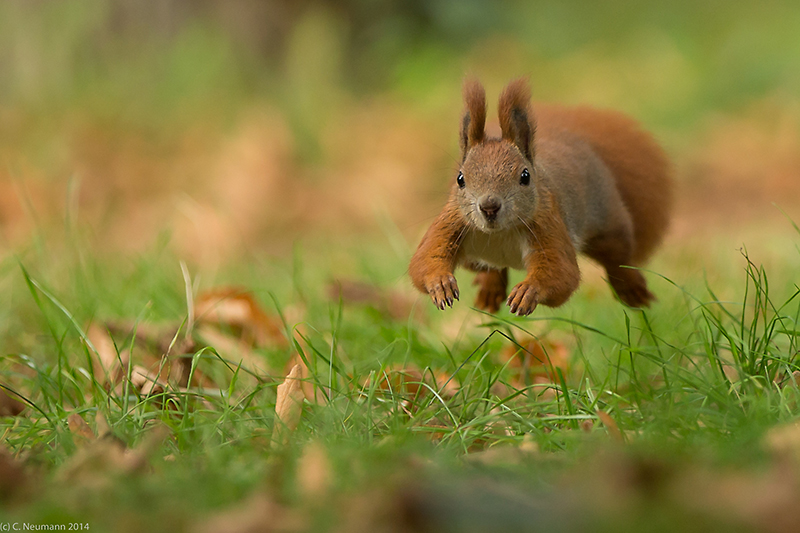
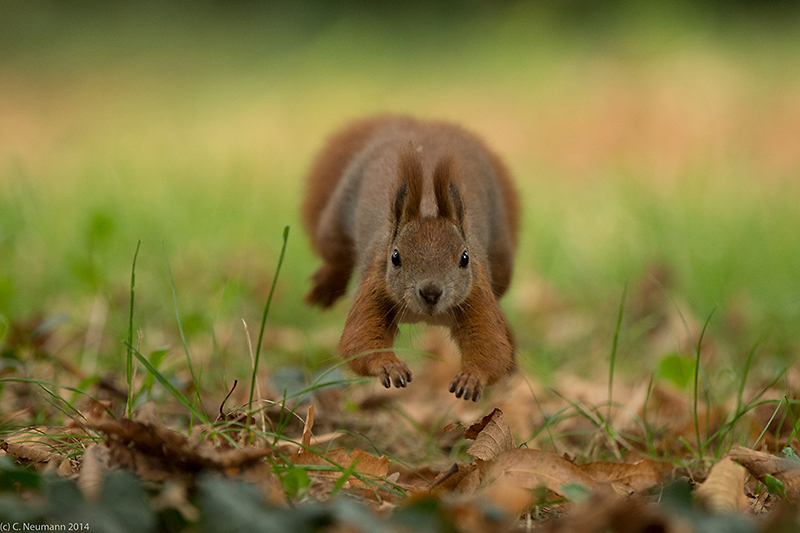
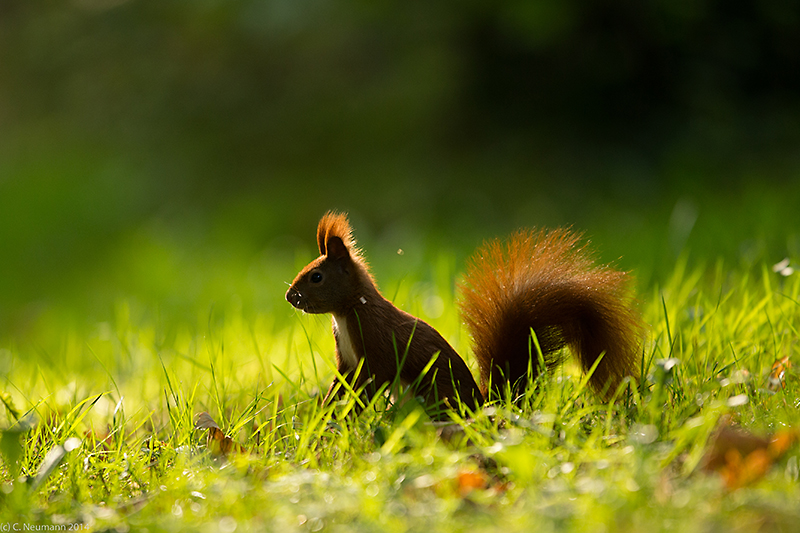
This fall, I spent some afternoons photographing Red squirrels (
Sciurus vulgaris). My intention was to catch them in action. So I lured them with a handful of hazlenuts and prepared for shooting from a low angle with my 70-200 mm/f 2.8 lens. The autofocus did a pretty good job although the failure rate at such a close distance is still immense.
Sunset Starlings
Oct 30, 2014
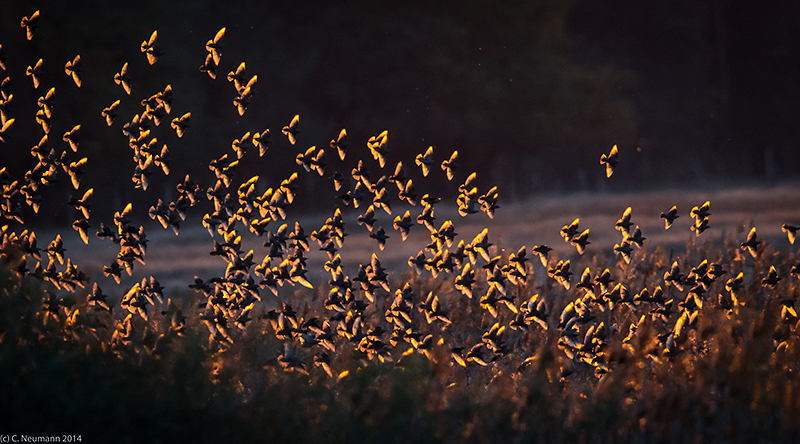
Not much to report currently. I shot this beautiful scene of Eurasian starlings
Sturnus vulgaris) flying to their roost two weeks ago at Gülper See, (Brandenburg/Germany) with a 600 mm / f 4.0 and a mounted 2x extender at ISO 5000.
Goshawk is Bird of the Year 2015
Oct 20, 2014
The goshawk (
Accipiter gentilis) has been elected as the "Bird of the Year" 2015 by the NABU (Naturschutzbund Deuitschland), Germany's largest nature conservation organization, and its Bavarian sister organization LBV (Landesverband Vogelschutz). Although there are some prospering urban populations , this species is still on the decline in rural areas, due to illegal persecution.
Dogfight!
Oct 09, 2014
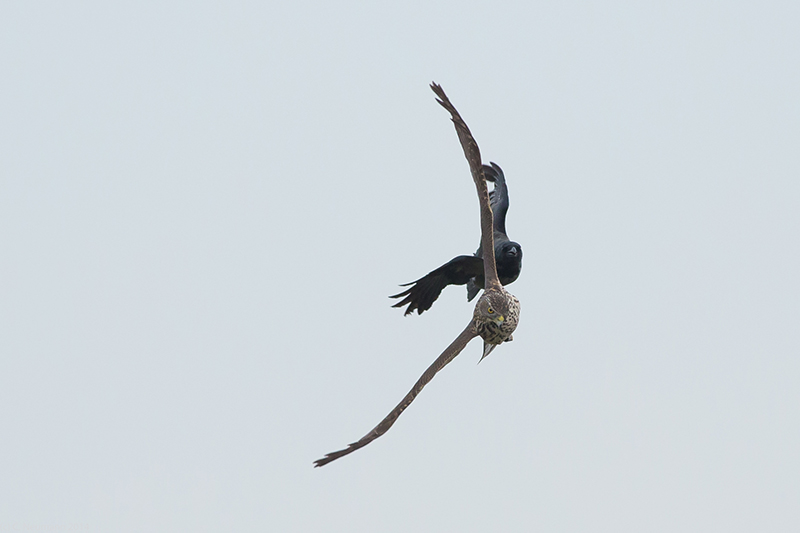
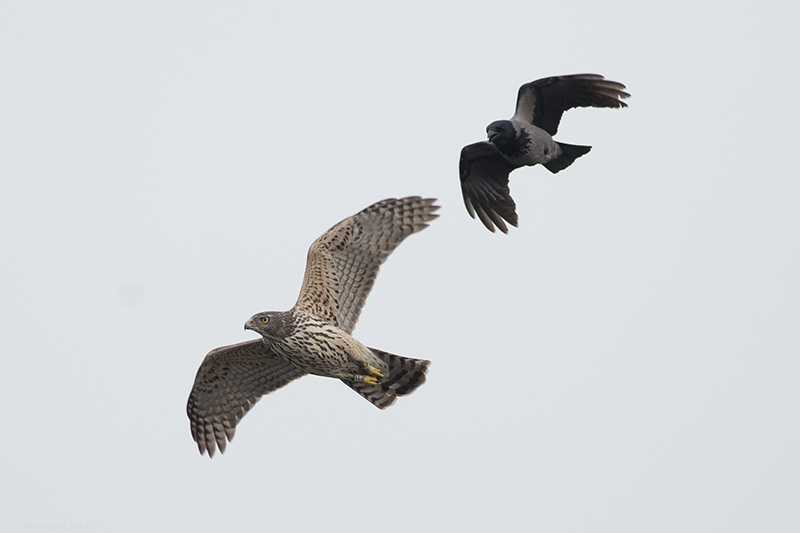
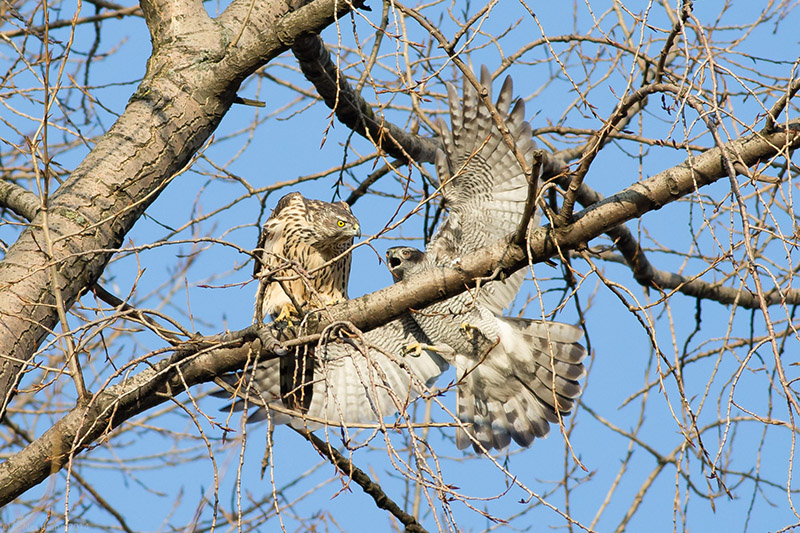
In late summer and fall, when the young goshawks are fully fledged, one can frequently observe spectacular dogfights among goshawks and hooded crows. Such fights do also occur among crows and kestrels, but these have a rather sportive and fun character. Goshawks, however, are hooded crow's most deadly enemies and there is a profound hatred of goshawks. Young goshawks have a significant lack of hunting experience and so, one can observe goshawks chasing crows and vice versa, crows (once the whole bunch is alarmed) chasing the goshawk. The goshawk, almost ever, will turn tail and run. You can be sure, that adult goshawks won’t think twice and make short shrift of a hooded crow!
Red-Footed Falcon Irruption Update
Sep 11, 2014
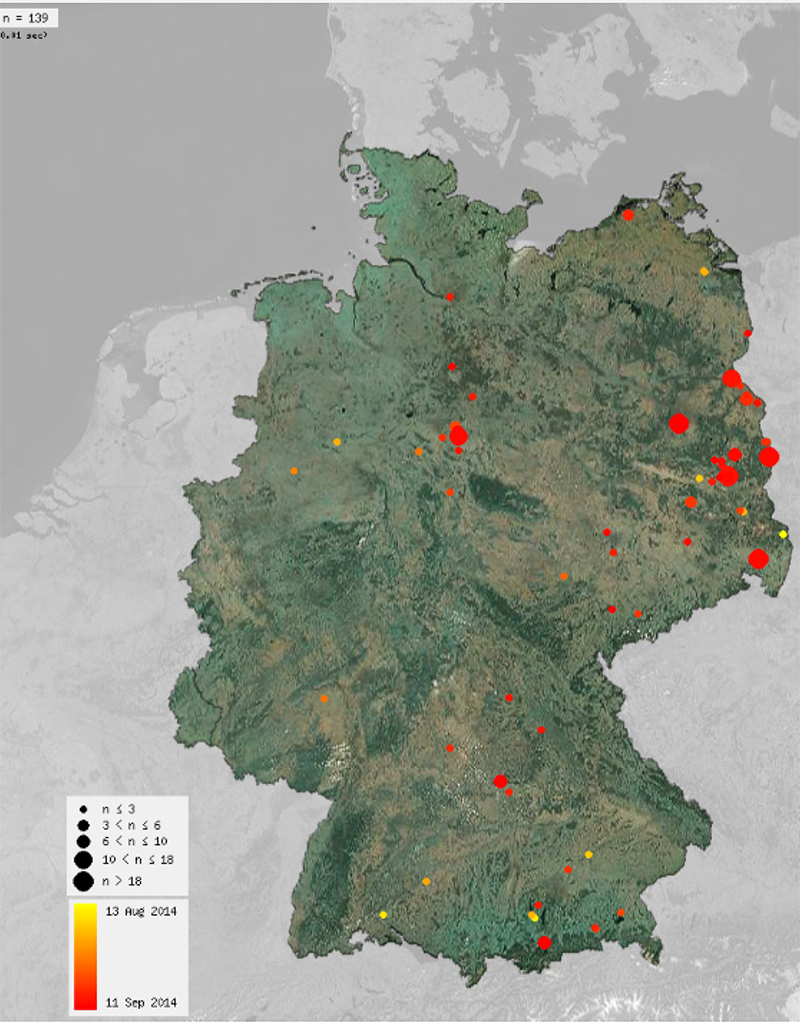
This is a short update of the current red-footed falcon irruption: As the map (taken from ornitho.de) shows, the most records of this fall are from southeast Brandenburg and northern Saxony. There is another isolated cluster in central Lower Saxony. Only few birds have been recorded from the other German countries, most of these are from Bavaria and Thuringia. Although there was a break in the weather with an incoming low pressure area on Monday, a flock of 25 red-footed falcons has been discovered in the Spreewald swamps (Brandenburg) two days ago. In the Berlin city limits, 2 to 4 birds were still present this morning.
Red-Footed Falcon Irruption!
Sep 09, 2014
Red-footed Falcons everywhere! The Red-footed falcon (
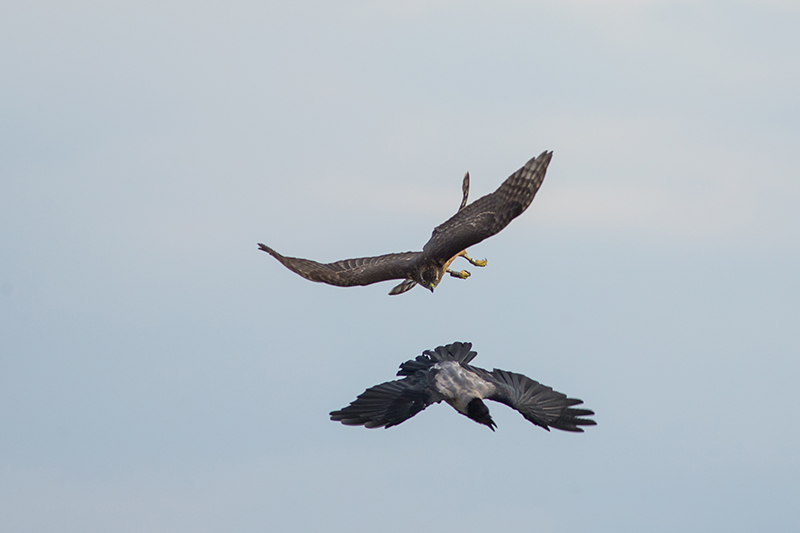
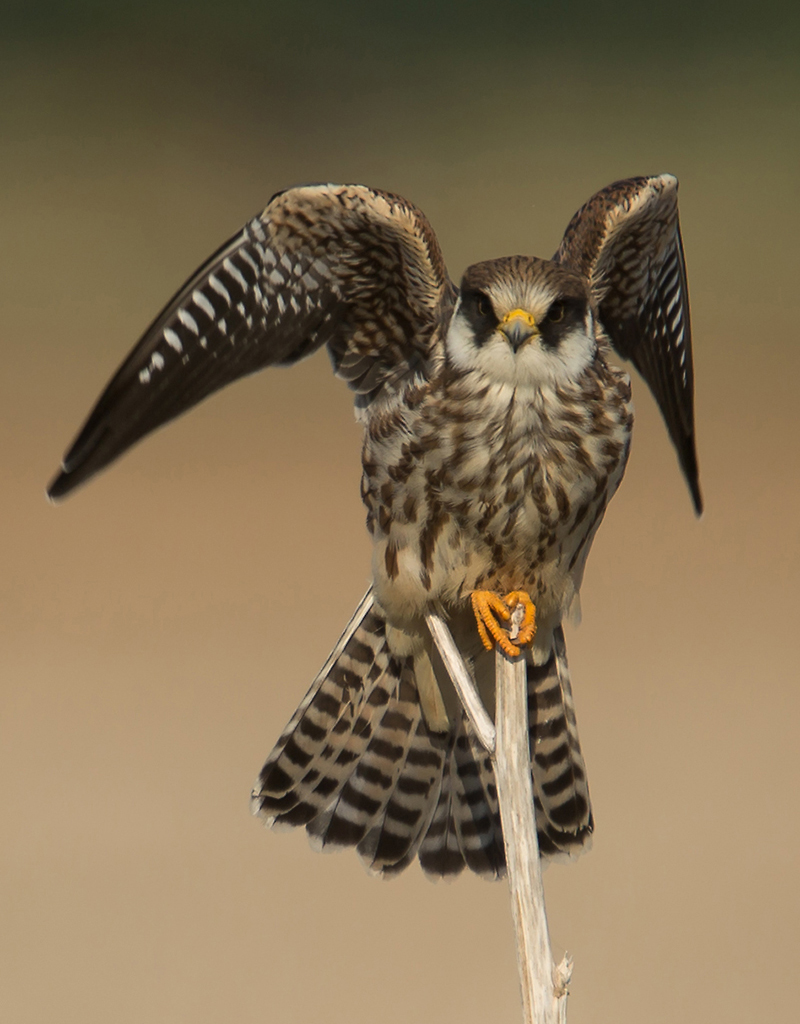
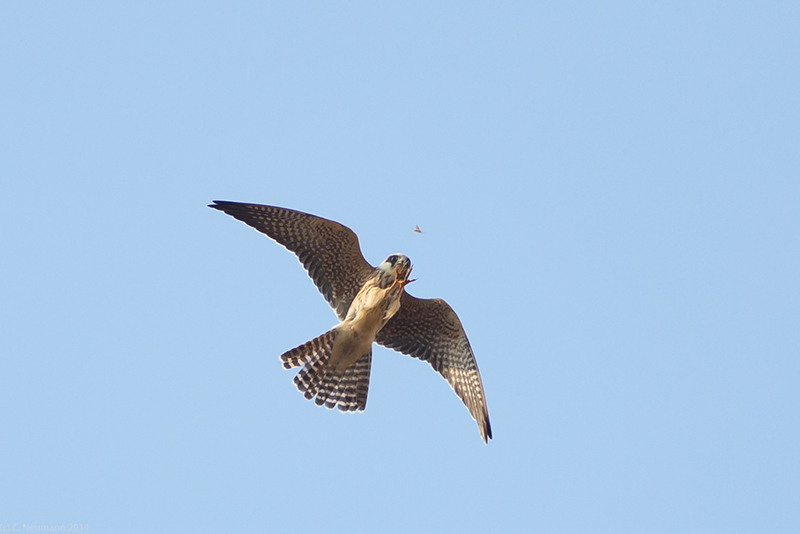
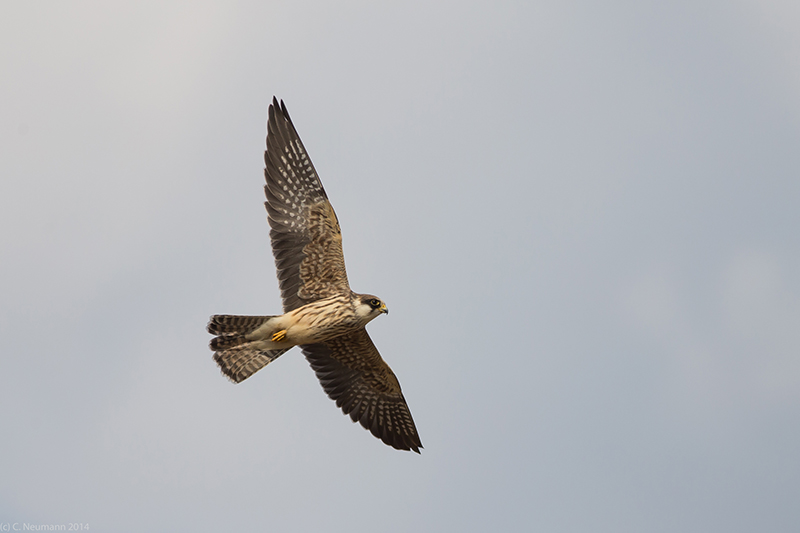
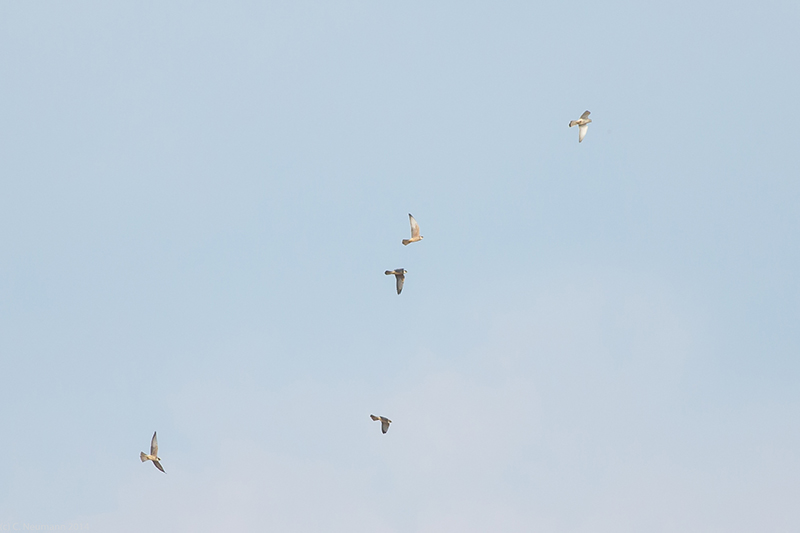
Falco vespertinus) is a small falcon breeding in the steppe area of central Asia and Eastern Europe. In the west, the breeding distribution reaches into the Pannonian Basin (Hungary). Red-footed falcons are strictly migratory, wintering in Africa south of the tropics. During fall migration, vagrant birds, especially juveniles, regularly show up far west of their normal migratory routes. This phenomenon is supported by easterly or southeasterly winds and warm temperatures. This was exactly the case during the last couple of days and so, a flock of 10 Red-Footed falcons was discovered last weekend just at the southern city limits of Berlin. Although knocked out by a serve cold, I could not resist to grab my photo gear and to try my luck. The first picture shows a juvenile bird, the second one shows a flock of four Red-footed falcons (the bird in the top center is an adult female) mobbing a kestrel (the bird on the top right). The third picture shows a juvenile Red-footed falcon snatching an insect. Flying insects (dragonflies, mayflies, caddisflies and such) play an important role in the diet of Red-footed falcons and they are acrobatically hunted in flight and digested on the wing.
Yesterday, a sleeping roost of 22 birds was reported from the banks of the Oder River, just south of Frankfurt and single or small groups of falcons are currently reported from all over the country.
Poor Goshawk Breeding Success in Berlin
Jul 10, 2014
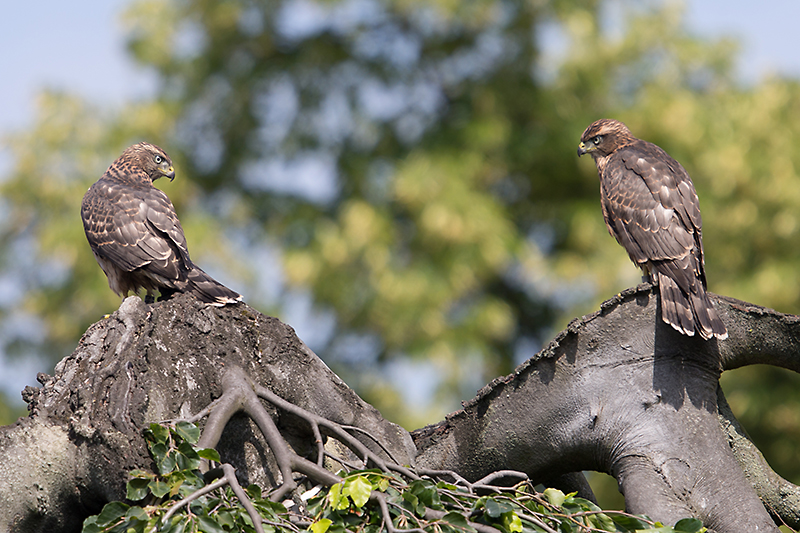
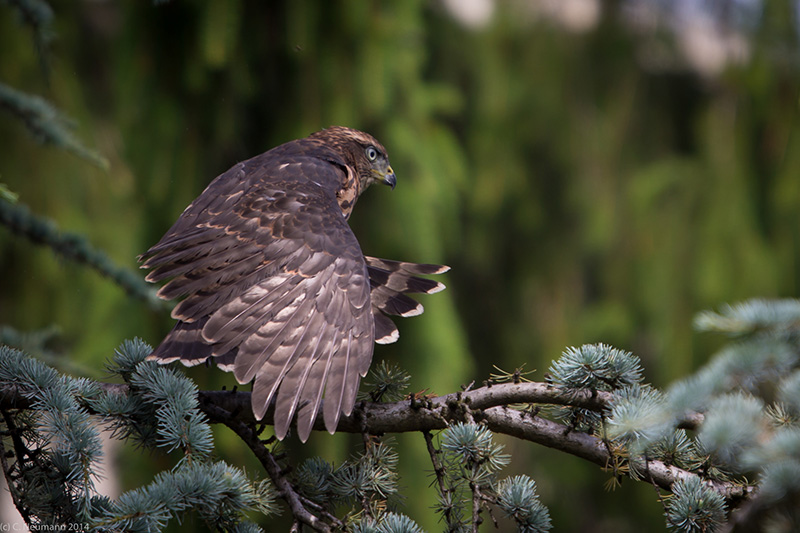
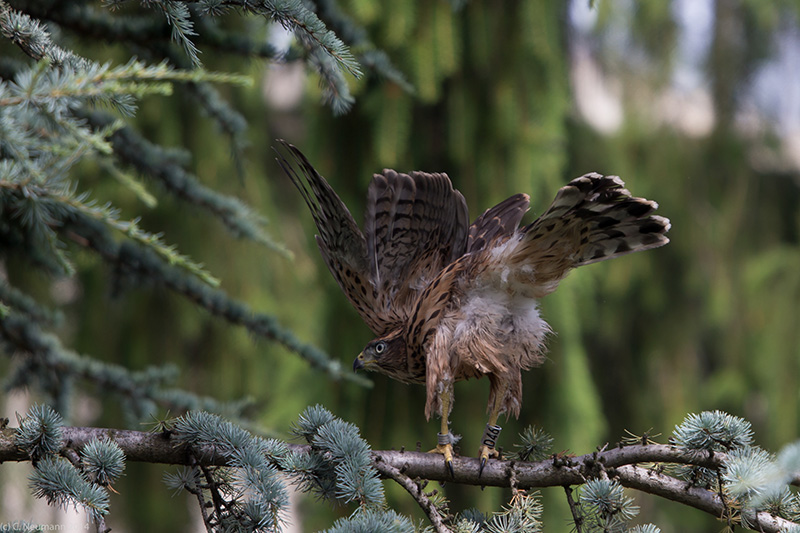
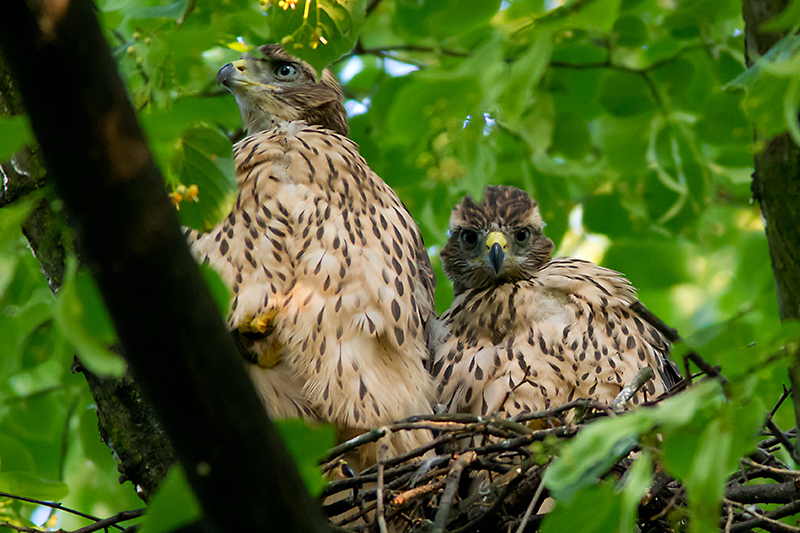
2014 was not a good breeding season for Berlin's goshawk population. For unknown reasons, many pairs did not breed and others had little success, raising one or two instead of three or four hatchlings. Moreover, in many well-known breeding pairs, one of the adult and experienced partners was replaced by a young (2nd year) bird which bred for the first time. Why are so many adult goshawks missing? Is this a hint to human persecution? For the moment, we don't know. However, the goshawk pair in my neighborhood was successful, raising two hatchlings as usual.
The pictures above show the two siblings waiting to be fed by their parents, and one of the birds stretching. In the lowermost picture, the color band of the actual banding programme is visible.
The Apical Region of the Mediterranean Heart-Urchin Echinocardium fenauxi Pequignat, 1963
Jun 26, 2014
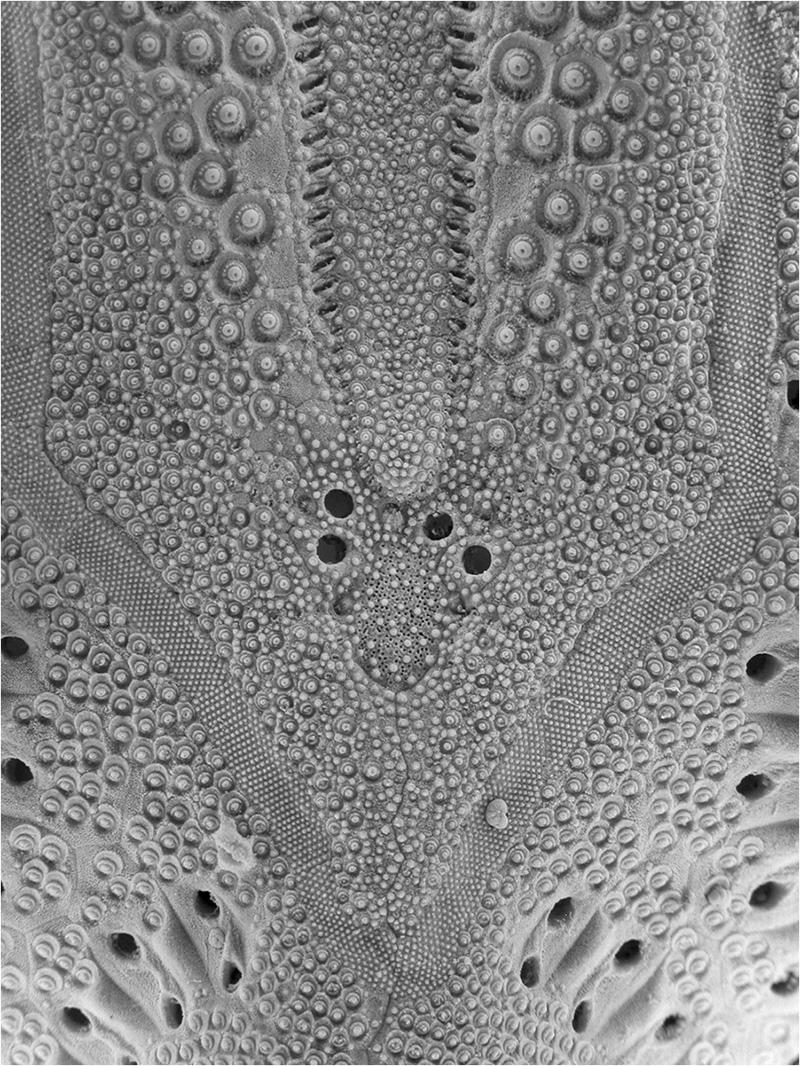
This is a close-up view (1x2 mm) of the apical region of the heart urchin
Echinocardium fenauxi, a sea urchin of the order Spatangoida. This species is to be found in parts of the Mediterranean, where it is endemic. Prior to photography, the test has been denuded from spines and cleaned with hydrogen peroxide to reveal the delicate surface details. In the center of the image, the apical disk with the madreporite (sieve plate) and the four genital pores are visible. Above, two straight rows of ambulacral pores belonging to the frontal ambulacrum reach for the margin of the frame. Here, and in contrast to the otherwise similar and much commoner species
Echinocardium cordatum, the pores are arranged in regular lines, whereas in the latter species, the pores are alternating in an irregular manner. The ambulacral rows of pores are guarded by enlarged tubercles which supported specialized spines. Since
E. fenauxi is a species burrowing deep into fine to medium sandy substrates, the spines had the function of forming a protective arc over the ambulacral furrow to prevent sand grains blocking the respiratory tube feet and the ciliated mucus band transporting nutrients to the mouth. The apical disk and the frontal ambulacrum are bounded by a fasciole. In the case of this species it is an internal fasciole, a diagnostic feature of the Echinocardiid family. Fascioles are bands of milliary ciliated spines creating water currents for the animal’s respiration and waste disposal. In the lower corners of the image, parts of the paired ambulacra with their large respiratory pores can be seen.
This picture is an excellent example that high quality imaging complying with scientific standards can be carried out with low-budget equipment. This photograph has been taken with my Nikon Coolpix 4500 workhorse and a mounted Nikon SL-1 ring light. This old-time 4mp compact digicam went on sale in July 2002 and is still available from Ebay. Its excellent depth of field and close-up proficiencies still make it my first choice for scientific imaging.
A Black-Browed Albatross at Heligoland
Jun 06, 2014
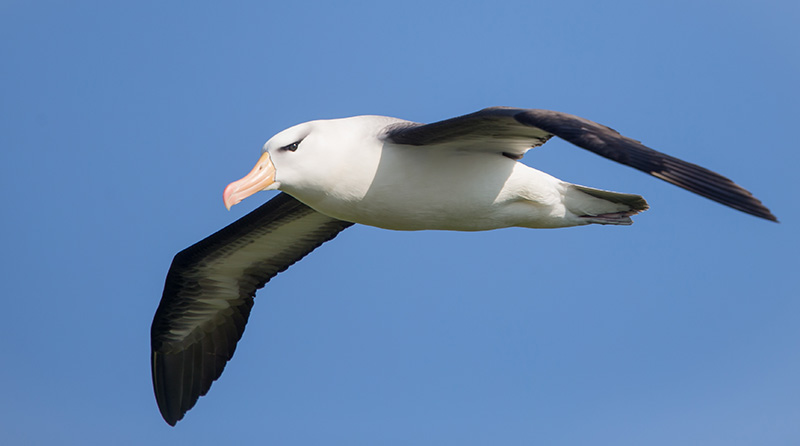
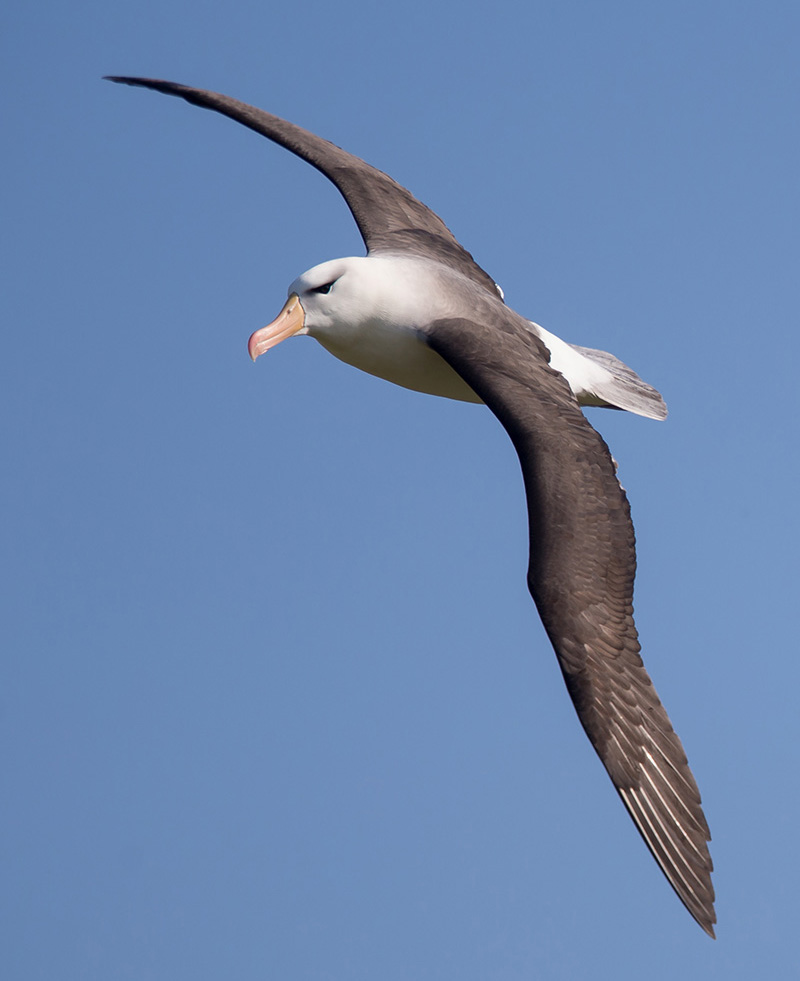
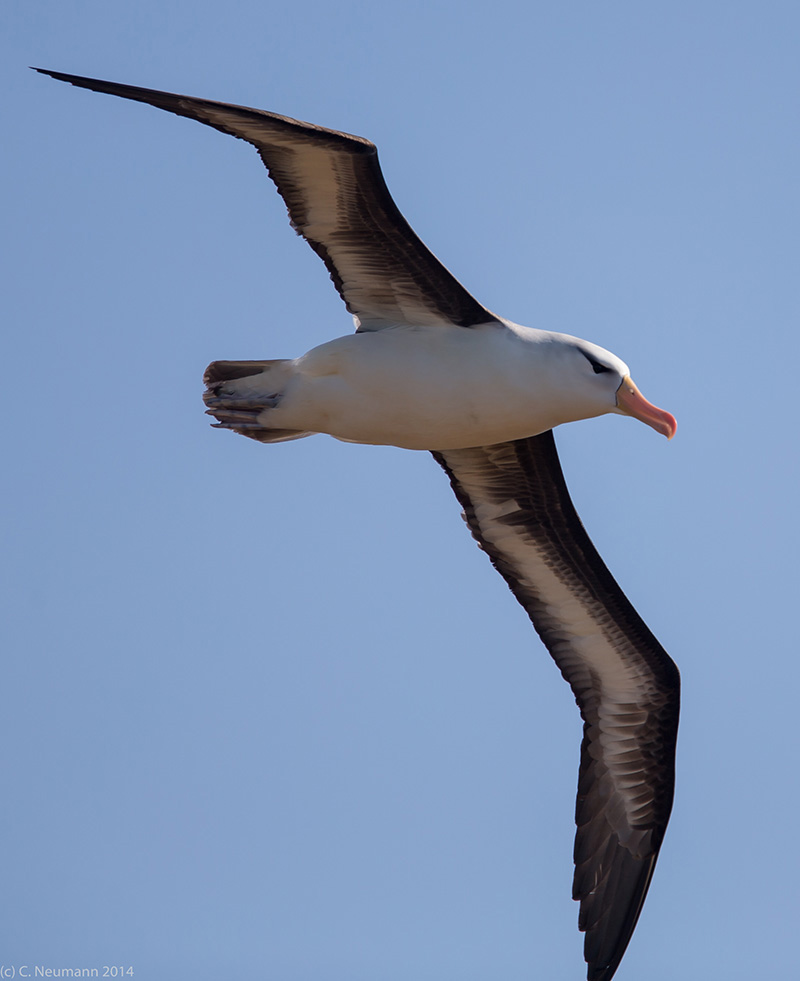
The Black-browed Albatross (
Thalassarche melanophris) is a pelagic bird of the southern oceans which breeds on the subantarctic islands between South America to New Zealand. Its normal northern range is in the Humboldt Current to Peru and in the Atlantic to southern Brazil. Occasionally birds show up in the northern hemisphere. So did an adult Black-browed Albatross which was first noticed at Skagen (Denmark) on the morning of May 27th. Later that day the bird was seen from a vessel off the Swedish coast. On next morning (cloudy and windy) the bird was first seen on the roadstead between Heligoland main island and the Heligoland dune, heading north. It came around briefly later that day and the next morning, only seen by few excited birders. Later on May 29th, the sky had cleared and the wind declined, the bird pleased numerous birders gathering at the “Lange Anna” (a famous sandstone pinnacle), by flying several circuits just over their heads, before it flew off and was not seen any more for the next couple of days. It returned to the island on June 4th and was also seen the following day.
There are about 30 records in Western Europe including birds building nests in Northern Gannet colonies and returning for many years. According to Howell (2012), summer records on the northern Hemisphere mirror the species’ higher-latitude summer distribution and lower-latitude winter distribution in the southern hemisphere. This is the first species record for Heligoland and the second for Germany.
Note: Heligoland is a small German archipelago in the North Sea, located 46 kilometers off the German coastline. It consists of two islands: The main island and the “dune”. What Cape May is for American birders and the Isles of Scilly for the British, is Heligoland for the German Birding community.
Mating Goshawks
Mar 21, 2014
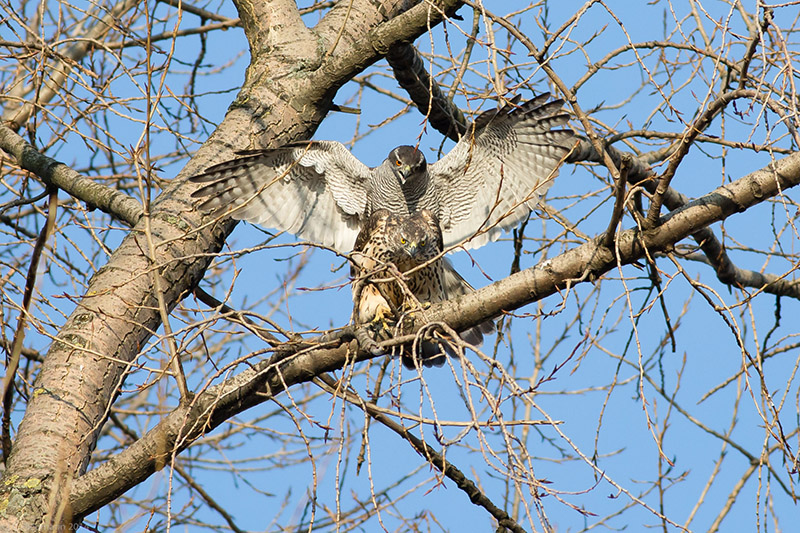
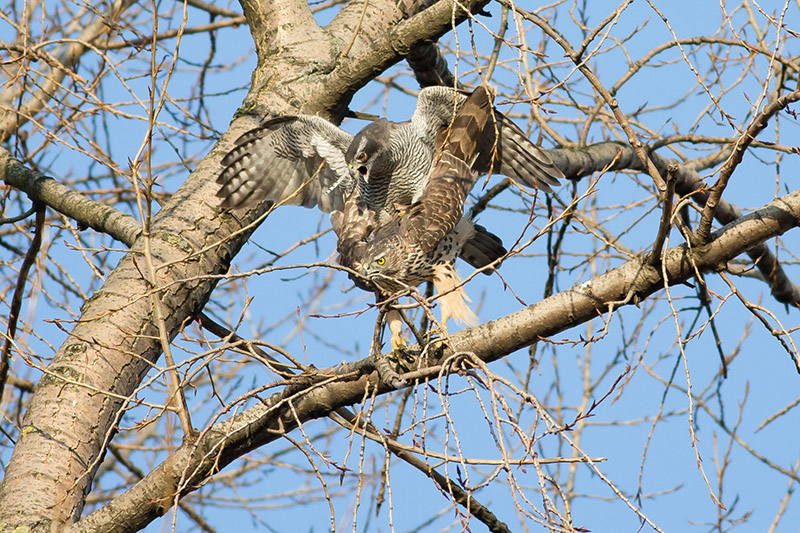
After some hard- and software problems (solved), I loaded up a number of goshawk images of this years‘ courtship/breeding season. Among these is a sequence of a mating goshawk pair. Three images are shown here. The female is a second year immature, breeding for the first time in her life. The male is adult, but suffers from a lesion of the left eye. The complete sequence and many more new images can be viewed in the Birds of Prey gallery.
Shooting the Curl
Jan 23, 2014
I love waves. The raw power and pure energy fascinates me. I can spend hours and hours watching a big swell approaching the shore, generated and driven by storms somewhere out in the open ocean. Early morning or evening light and a fresh offshore breeze blowing the spray over the wave crests generate stark images of nature’s powerful beauty. The west coast of Fuerteventura (Canary Islands) is a wonderful and easy-to-reach place for wave-watchers. You have miles of untouched rugged coastlines, crystal-clear water and often a big swell with a wonderful shorebreak (at least during the winter months). Furthermore, the reliable trade winds blowing from the northeast cause a steep and spectacularly breaking surf. For photography, I mostly used my EOS 7D together with the EF 70-200 mm f/2.8 II and EF 400 mm f/5.6 lenses. Selecting Tv mode with a fast shutter speed (1/2500s), AF on “Ai” plus zonal mode and high speed continuous shooting proved to be the best setting.
Capturing Swifts in Flight – More than Spray and Pray!
Jan 10, 2014
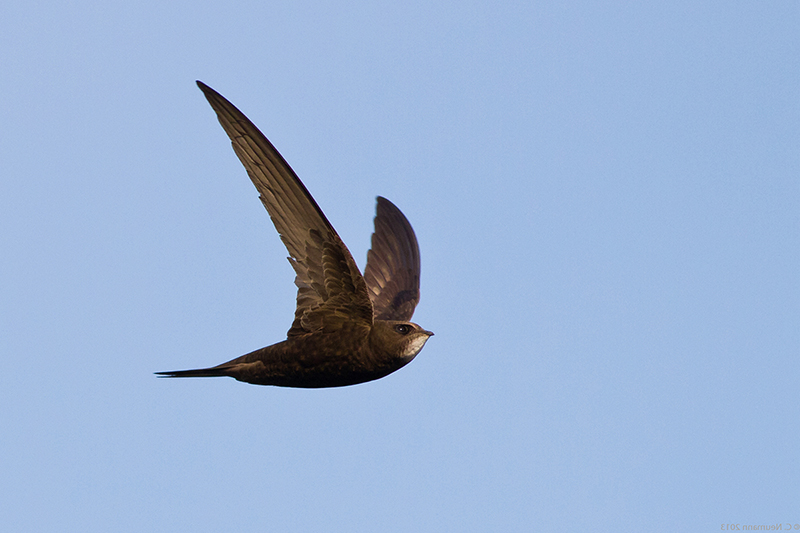
Photographing birds in flight is not an easy task. Capturing swifts in flight is a challenge! Swifts are considerably small birds, their flight is erratic and flight speed is incredibly fast. When hunting insects or during courtship display, swifts can reach maximum speeds of 200 km/h (125 mph)! However, achieving sharp images of flying swifts is more than spray and pray. You can increase your chances of success when you are prepared and keep some important things in mind. Here is a short tutorial of how to capture tack sharp images of flying swifts. Of course, it can be applied for other fast flying birds as well.
Locality and lighting: First, you need to find a suitable locality where swifts are commonly passing by. This could be in the vicinity of a breeding colony or at preferred hunting sites. These may be found far away from their breeding places. Since you want the swifts to pass by at eye level, it would be favorable to position yourself on a raised structure. The roof of a large building or a cliff edge will work well. Also keep in mind that during cold or windy weather, swifts prefer to hunt over open water such as lakes and ponds. You also don’t want the swift to occur as a black silhouette against the sky, so lighting is very important. Avoid overcast skies when the birds will appear against a white background. The best light is front lighting. Shooting against the western sky in the morning and against the eastern sky in the evening will work fine. At my experience the best light occurs about one hour after sunrise and one hour before sunset, respectively, when it is bright enough to achieve high shutter speeds. Avoid the dull and harsh light of midday.
Lens and camera choice: Swifts are small birds, about the equal size of a sparrow, so a long lens is a must. I tested the Canon EF 70-200mm /f2.8 L USM II (with and without the 1.4 x extender), the EF 300mm /f2.8 L USM and the EF 400mm /f5.6 L. The 70-200mm lens does not match the focal length you will need and the 300mm /f2.8 is a heavy weight. You need to shoot free-handed over a considerable time span and this lens will soon lead to muscle fatigue (unless you are not a trained U.S marine!). So the light-weight and handy EF 400mm /f5.6 lens is my favorite choice. Your camera body should possess a good and fast autofocus, a high burst rate (about 8fps or more) and a sufficient ISO/noise performance. I am mostly shooting with Canon’s EOS 7D which is an sufficient camera for this purpose. Moreover, its sensor–related cropping factor adds a subjective 1.6x of focal length.
Camera settings: High shutter speed is the name of the game. Everything faster than 1/1600s will do, but I prefer higher shutter speeds such as 1/2500s. Set your camera on Tv mode and select shutter speed. If you start shooting after sunrise, subsequently adjust shutter speed when daylight continues to improve. Select ISO “auto”. Shooting against a bright sky requires exposure compensation of + 1 to 1 ½ f-stops. If your lens or camera possesses an image stabilizer (IS), deactivate it. At the applied shutter speeds IS is not only unnecessary but moreover, the engine processing time makes your camera slower. Set your camera’s shooting mode on “High speed continuous shooting”. Make sure that you have installed the camera’s newest firmware. For example, in the Canon EOS 7D, updating the firmware almost duplicated the camera’s image buffer when shooting at the maximum 8fps, letting you to grab up to 25 RAW images (15 with the 1.0 firmware) before things start to slow down. Select Autofocus mode “AI Servo AF”. Generally I prefer single point AF with the central AF point active. This is the most accurate and fastest AF point available. However, you will see that it is nearly impossible to keep a small and fast flying bird in the center of the viewfinder which furthermore makes unpredictable turns and maneuvers. I therefore achieved much better results selecting “Zone AF” with the central zone activated. This allows 11 sensors (in the EOS 7D) to keep the subject in focus. It is also very useful to set custom function “AI Servo tracking sensitivity” to “Slow”. This keeps the camera from jumping quickly to the background if the sensor falls off the subject momentarily. In my EOS 7D, this is custom function C.Fn III/1. Check out your camera instructions for other cameras/brands.
Shooting strategy: When you are on location with your camera prepared, make sure that the battery is charged (with a second one in your bag) and that you've got enough memory space in your camera (the last point mentioned is not negelectable since shooting numerous bursts will fill up your memory card much faster than you may think!). So you are ready to shoot. Swifts have their activity maximum in the morning hours and in the late afternoon until dawn. These are also the times when they tend to fly low. During the rest of the day, they are hunting actively as well but do so at much higher altitudes. Once you have spotted a flock of swifts or a single bird flying into your direction, select one of them in the viewfinder and try to keep it in the center. It is also important to pre-focus on distant birds. Press the AF button when the bird approaches and track the bird until it is in shooting distance. Shoot a burst while panning the camera. You need to react fast and response quickly. This is a little bit like skeet shooting and a large part of the fun! Do not try to switch to another bird when you lost your target in the viewfinder. Wait for another flock. The rest is practice. I still discard 98 percent of the images, but 2 percent are keepers.
In central Europe, swifts are elusive summer birds arriving in May and leaving in August, so be prepared.
Happy shooting!
Berlin: Goshawk Capital of the World
Dec 04, 2013
The Goshawk (
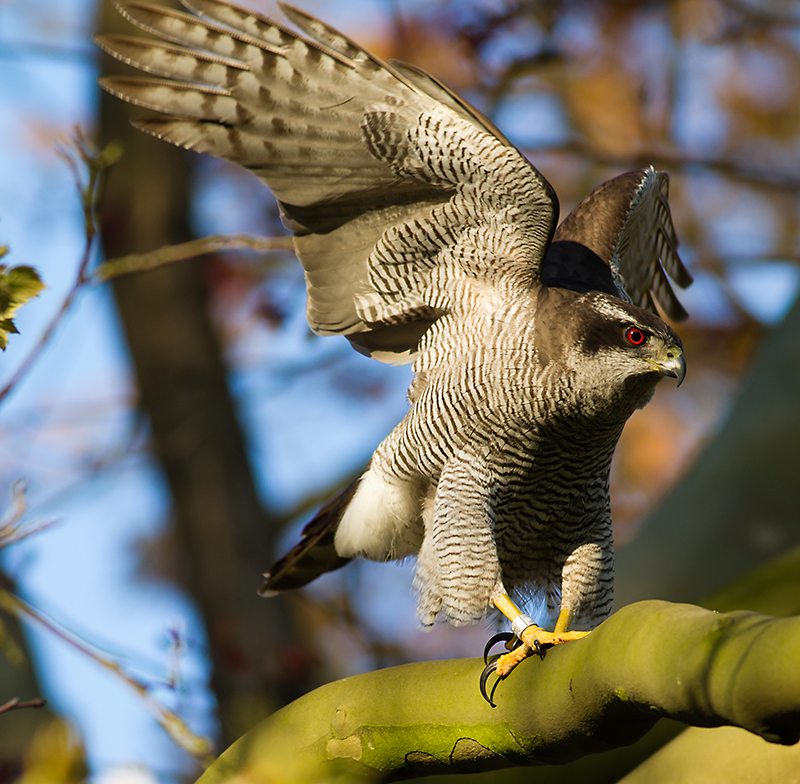
Accipiter gentilis) is a magnificent and powerful raptor distributed all over the Palaearctic and parts of North America. Hated and illegally pursued by pigeon breeders and gamekeepers, it remains a timid woodland bird over large parts of its range. Not so in Berlin! The buzzy German capital with its vivid night life, club scene and cultural offerings not only attracts flocks of tourists but also hosts a large and healthy population of the Northern goshawk. Since monitoring started in the 1980s, the population number is constantly growing up to recent > 85 breeding pairs with an estimated number of unknown pairs in Berlin’s large forests. In Berlin, goshawks prefer to breed in parks and cemeteries where they build their large nests in the tops of old trees. Courtship begins in January when the mating calls can be noticed by the wary observer. Egg deposition is generally in March. One to four hatchlings are raised which become full-fledged in July. Berlin’s goshawks mainly feed on domestic pigeons and rats, thus rendering a great job to control these pests.
To learn more about origin, dispersal, longevity and population dynamics of Berlin’s goshawks, a color banding program has been started in 2012. Detailed information (in German) can be found
here.
Urbanisation of goshawks has occurred also in other large European cities such as Amsterdam, Prague or Cologne, but none of these cities can claim to host such a large breeding population. The main reason of this phenomenon might be the constant availability of prey all year round plus the security from human prosecution. Many birds even became accustomed to the presence of humans and became very trustful, thus offering great photo opportunities which are difficult to find elsewhere.
The first picture above shows a pair of goshawks during courtship feeding in March. In close vicinity of the nest, the male (left, notice red eyes and smaller size) deposits prey on a perch and subsequently attracts the female by calling her. Generally the male flies off before she approaches but this time, I was lucky to catch Mr. and Mrs. Goshawk smiling for the camera!
Kestrel on the Cover
Nov 26, 2013
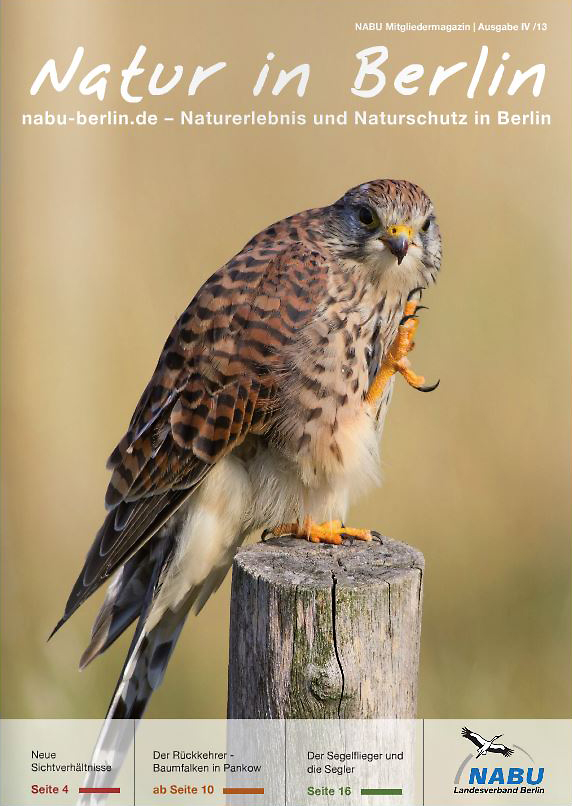
One of my kestrel portraits made it on the cover of the NABU journal Natur in Berlin. NABU (Naturschuzbund Deutschland) is Germany’s largest and oldest nature and bird conservation organization. The recent issue of
Nature in Berlin is a special volume featuring the astonishing diverse birds of prey occurring in the German capitol. Apart of the title page, the volume contains seven other of my raptor images. The complete contend can be viewed online
here.
Grassshopper Snack
Nov 25, 2013
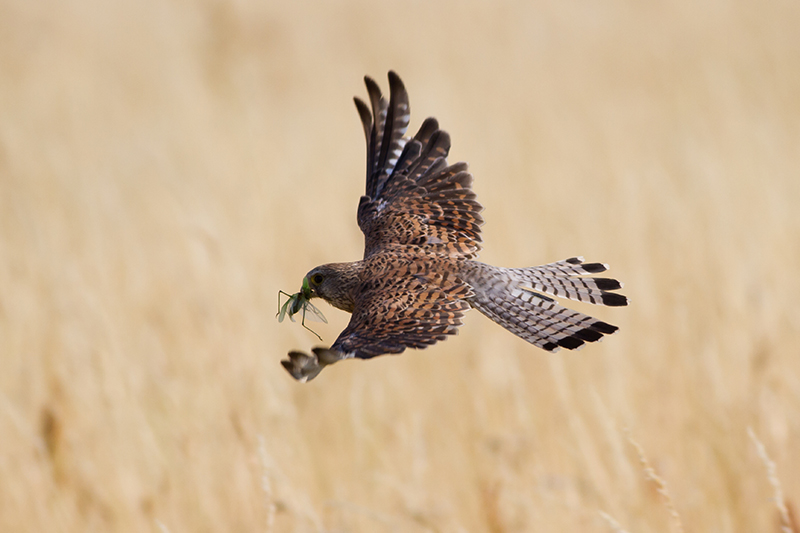
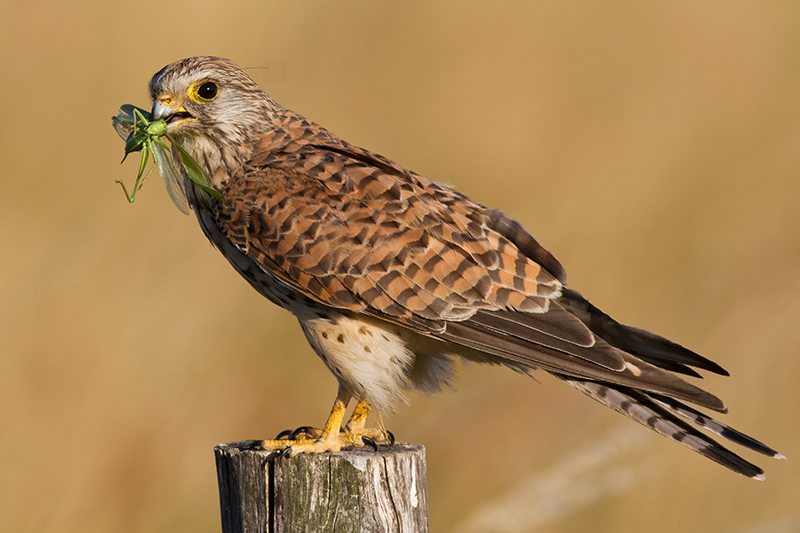
During late summer and early fall, the Great green Bush-Cricket (
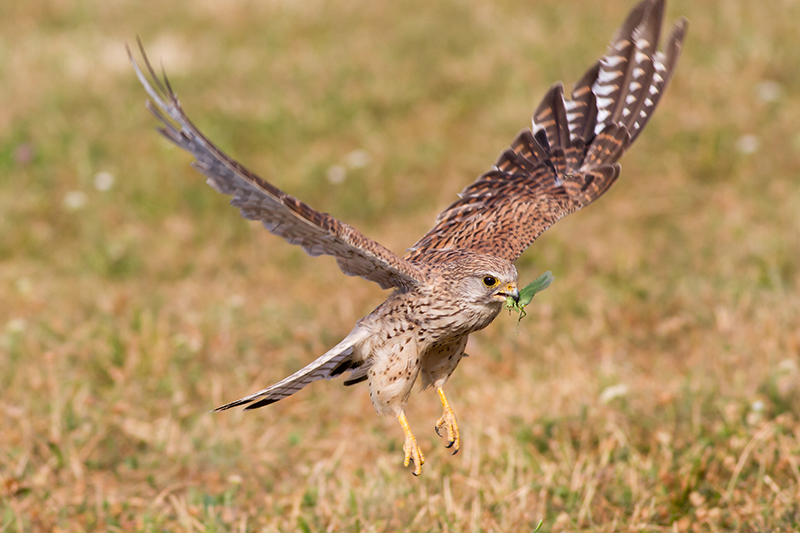
Tettigonia viridissima) represents an important food source for the Eurasian kestrel, especially in years when voles are scarce. The grasshoppers are most active in the late afternoon and this is the hunting time for both, kestrels and photographers.
Interestingly, prey handling behavior differs much among individual birds: Whereas some kestrels manipulate and ingest their prey in flight, others prefer the comfort of a perch, usually a fence post. Generally, the first thing kestrels do after a successful catch is to bite off the head of their wriggly prey, thus preventing escape. Sometimes, however, they omit to do so, as in the case pictured above.